

 - Economic calculations are being conducted on how to allocate mineral royalty revenues between soums and aimags -
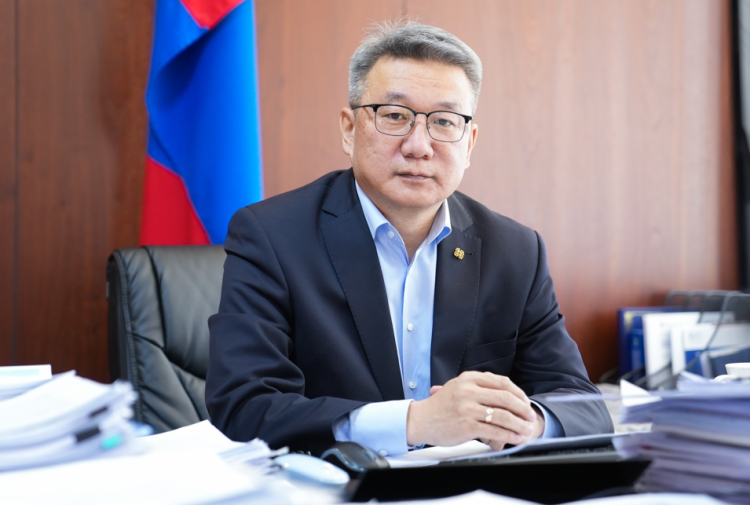
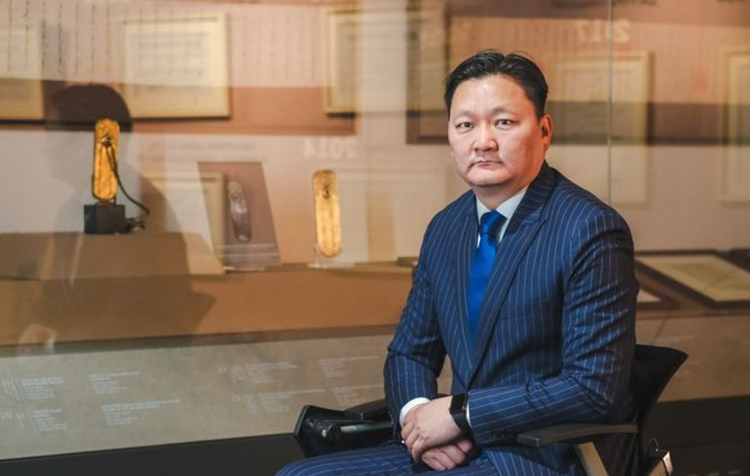
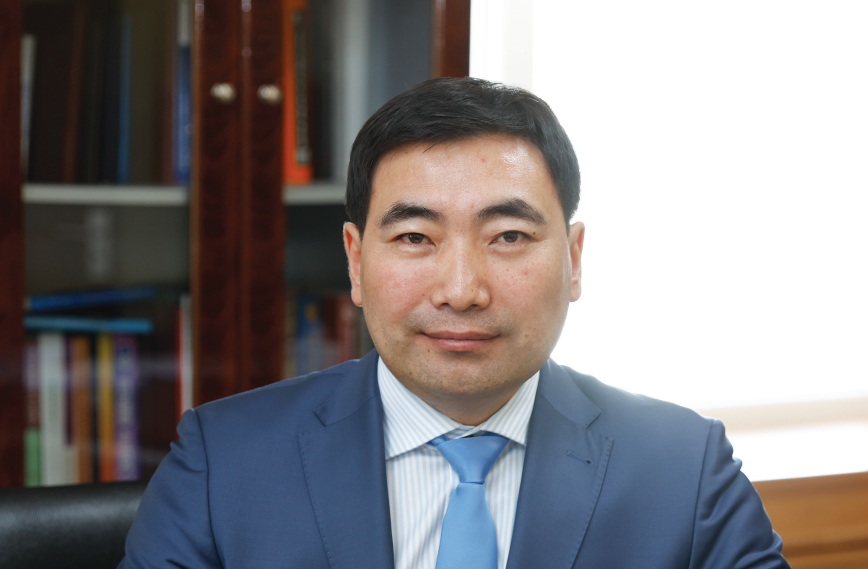
Mining Insight’s N. Ariuntuya spoke with B. Dashpurev, State Secretary of the Ministry of Industry and Mineral Resources.
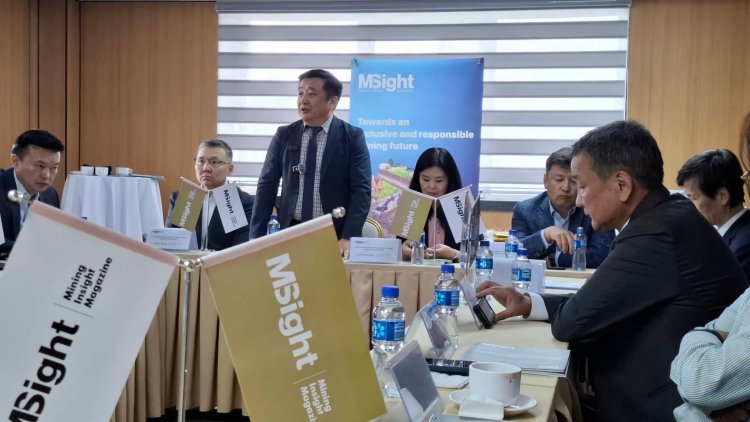
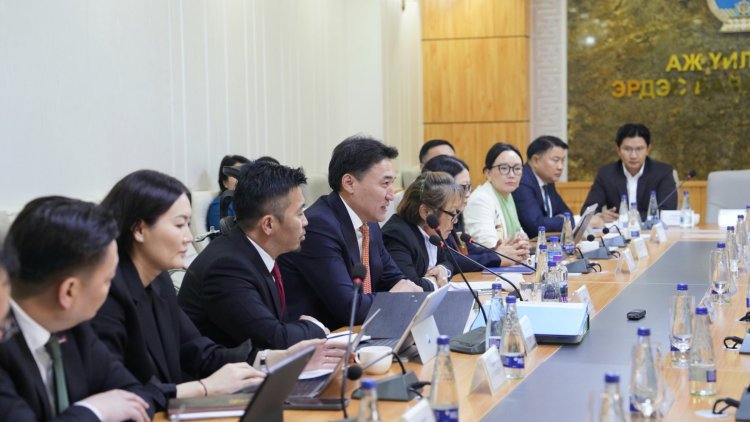
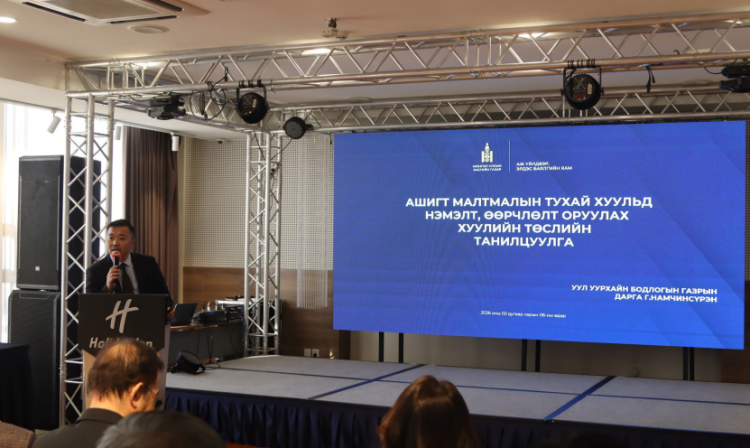
The Ministry organized discussions on the draft amendments to the Minerals Law across all 21 provinces. What issues were most frequently raised during these discussions? Based on the feedback received, what principal changes are expected to be introduced in the draft?
The proposed amendments to the Minerals Law are supported not only by businesses but also by citizens. The main reason for this support is the demand for a fairer distribution of mineral royalty revenues (MRR) to local communities. A common concern raised is that MRR are currently distributed equally between provinces with mining activities and those without. Residents in mining regions are asking for changes so that the benefits of mining are more directly reflected in their local livelihoods. Second, environmental protection and mine rehabilitation were major issues raised by citizens. There are strong calls to establish a legal framework that ensures proper and high-quality mine closure. Third, citizens support policies aimed at expanding and diversifying Mongolia’s economy. At the same time, they emphasize that mining activities must be environmentally responsible. For example, proposals were made to use less water in gold extraction and processing technologies, to avoid the use of sodium cyanide, and to introduce dry processing technologies wherever possible. Within the framework of corporate social responsibility, citizens also emphasized that mining companies should support local businesses. Even when purchasing items such as work clothing, companies should prioritize local suppliers. It was also noted that companies should treat local administrative units and citizens with greater respect. Concerns were raised that some companies tend to disregard local communities by emphasizing that they operate under licenses granted by the central government.. These proposals are being reflected to a certain extent in the amendments to the law. There were also conflicting views. One key issue concerns disagreements among local authorities regarding which level of government should engage with mining companies. At the provincial level, it is argued that provincial citizens’ representative councils are elected from soums and therefore decisions should follow the principle of representation. Provinces believe they should ensure unified policy coordination so that each soum or bag does not pursue separate approaches. Meanwhile, soum and bag administrations argue that as the direct local authorities responsible for the territory, they must be the ones interacting with mining companies in order to protect the interests of local herder communities. Discussions are ongoing on how to clarify and better define this issue.
What concrete solutions are being developed regarding the issues discussed above?
Solutions are being developed for specific issues. In particular, economic calculations are being conducted on how MRR could be distributed between soums and aimags and what options exist for differentiated allocation. When gold prices are high and production increases, MRR also rise. As a result, some soums may receive large payments, potentially exceeding the revenues of their aimag. This raises questions about how such funds should be used and what they should finance. Therefore, the economic calculations are being refined. Regulations on mine closure will also be improved. First, the project operator will carry out rehabilitation and closure. A financial guarantee will be placed and used for rehabilitation and closure activities. Second, a new project can only begin once the previous project has been fully closed. If a new project is planned in parallel, it will only be allowed after verifying that closure and rehabilitation are being properly implemented according to the plan. Improving environmental rehabilitation will reduce the negative impacts of mining, which may also improve public attitudes toward the sector. Fair distribution of MRR is also expected to improve living conditions for people in mining regions. Companies often ask how domestic and foreign investments will be protected. In many cases, projects are delayed not because of legal regulation but because of local opposition. If these issues are addressed, projects may receive greater support.
Were there issues that could not be addressed within the amendments to the Minerals Law?
Local representatives raised concerns that baseline geological surveys are being conducted without consultation with local authorities. However, the ministry has taken a firm position that this cannot be changed. Mongolia must carry out baseline geological surveys and exploration in order to understand its mineral resource potential and define future prospects. Based on such information, the country plans its international cooperation and development strategies. Baseline geological surveys are not only related to minerals. They also assess the condition of the land and are therefore an important scientific activity. However, citizens often misunderstand these surveys as activities that disturb the subsoil, which leads to opposition and delays. For this reason, we explain that baseline geological surveys must be implemented consistently as part of state policy. During the consultations across the 21 provinces, one observation was that public understanding of mining has improved to some extent. In provinces that aim to develop mainly through livestock, agriculture, or tourism, there is increasing concern that they may fall behind provinces that develop through mining. Therefore, local authorities have expressed interest in implementing a limited number of responsible mining projects in an effective manner.
The Ministry of Industry and Mineral Resources and the Mongolian National Mining Association jointly organized the “Mining Week & MinePro 2026” event in London for foreign investors. How effective was this event? Some critics say that since there was no major new investment announcement, such meetings are unnecessary.
One of the key announcements we made was that the Government of Mongolia has launched the selection process for a strategic investor for the copper smelter project and has notified four shortlisted legal entities. In addition, the preliminary feasibility study for a plant producing 1 million tonnes of steel and 200,000 tonnes of pig iron has been approved, and preparations are underway to launch an open international tender for investors. The feasibility study for a coal pyrolysis plant based on the Baganuur mine has also been approved and preparations for investor selection are in progress. A working group has been established for the gold refinery project. We held meetings with two German companies and one British company. If Mongolia develops its own gold refining capacity, it will be able to separate not only gold and silver but also palladium. Furthermore, once the Erdenet copper processing plant is built, it will be possible to extract gold and silver that are currently not recoverable. An internationally accredited precious metals laboratory has also been established at the Geological Research Center. This will make it possible to analyze exploration results in a short time using advanced technologies. If a gold refinery is built, it will create new jobs, produce value added products, and support tourism by producing final products such as gold coins. Mongolia will also be able to produce 999 purity gold domestically and reduce the time and cost currently required to certify samples abroad. These initiatives were presented as part of a broader integrated project. We also introduced the planned amendments to the Minerals Law, which aim to intensify exploration by introducing different licensing mechanisms. By ensuring fair distribution of MRR and improving regulations on rehabilitation and mine closure, the basis for reducing local opposition will be created. Lowering the copper royalty rate to align with international levels will also enable copper projects to move forward. Globally, there is increasing attention to metals required for clean energy production, and exploration activities targeting these resources are expanding. Mongolia is working in parallel with these global trends and presenting opportunities for cooperation. For some time, due to changes in regulations and certain policy decisions, foreign investment interest in Mongolia slowed and the number of interested parties decreased. Internationally, there is growing interest in raw materials needed for clean energy production, and Mongolia is among the countries being considered. Therefore, we must actively communicate and present Mongolia’s opportunities to the international community. At the same time, many studies conducted ten years ago are no longer valid today. Conditions have changed, resource estimates and classifications have been updated, and technological progress has been rapid. For example, ten years ago studies suggested that building a gold refinery was not economically viable, that the technology was insufficient, that construction would take many years, and that building the facility alone would require about USD 70 million. Today the same facility can be built for USD 23–46 million and operated for seven years before being transferred to the state. When the copper processing plant was first discussed, recovering gold from copper tailings was not considered. Today it has become necessary. We need to recover gold and silver from Oyu Tolgoi tailings. Policies that focus on the future must be discussed and implemented. Only in this way can the country move forward. Without discussion and action, advanced technologies will never be introduced.
What were the main issues raised by investors?
Investors raised several common issues. First, they asked for measures to reduce local opposition. In this regard, we have taken a firm position with project developers. It is not only Mongolian citizens who oppose mining. This is a legitimate concern related to protecting the living environment and nature. Such issues also exist in mining countries like Australia and Canada. What is important is to establish legal regulations that ensure economic benefits for both sides while avoiding negative environmental impacts. Project developers should treat local communities with respect and work together to resolve issues. They also need to explain their projects clearly to local residents. The mining sector has not done enough to communicate and explain these issues. During the transition from exploration to production, project developers should explain to local communities what mining and exploration are and what benefits they bring to the local area and the country. In addition to focusing on exploration activities, they must also provide accurate information to citizens. Not only the Ministry of Industry and Mineral Resources but also project developers, professional associations, industry organizations, and researchers should work together to provide correct information to the public. Second, investors raised the issue of improving the investment environment. For example, they pointed to the case of copper production at Erdenet, where a 21 percent MRR is applied. They suggested reducing it to around 8–9 percent in line with international standards. Regulations are also being introduced so that state owned companies that sell domestically and process minerals into products are not subject to double MRR. These changes would lead to significant improvements. Investors also raised concerns about sudden state decisions to confiscate assets. Such issues must be addressed and protected through legal and regulatory frameworks.
ILLEGAL GOLD MINING WILL BE STOPPED
Gold prices and production reached historic highs in 2025–2026 due to global geopolitical conditions. The trend is expected to continue. Many countries are increasingly treating gold as a strategic asset to hedge against geopolitical risks and are increasing the share of gold in their foreign exchange reserves. What policy measures is Mongolia considering to increase its gold reserves?
Mongolia has previously delivered as much as 24.5 tonnes of gold to the Bank of Mongolia. In 2025, gold producers delivered 16.3 tonnes to the central bank. The target for this year is 20 tonnes. As of now, 2.2 tonnes have already been delivered, which is 22.1 percent higher compared with the same period last year. Gold prices have reached an unprecedented level and currently stand at around USD 5,186. Forecasts suggest that prices could rise to USD 6,000. In this context, the issue of increasing gold production will be discussed at the Government meeting on March 4, 2026. To support increased gold production, the Mineral Resources and Petroleum Authority has been instructed to approve mining work plans of gold mining companies within the first quarter. Early approval of mining plans will allow companies to attract investment and begin operations earlier. Second, the increase in gold prices has led to a rise in illegal gold mining activities. Since the autumn of 2025, the Ministry of Industry and Mineral Resources has established a joint working group with the Environmental Police and the Ministry of Environment and Climate Change. This work will continue. Illegal gold mining that damages the environment and contributes to the shadow economy must be stopped. In addition, to strengthen environmental responsibility, companies will be required to place 100 percent of rehabilitation financial guarantees. There have also been many complaints regarding projects affected by the “Long Name Law,” where measurement or mapping errors resulted in areas without rivers being classified as areas with rivers, leading to the suspension of certain projects. These areas will be re-measured. For projects that were operating before the law was adopted, or where reserves had already been established and plants were ready for construction, a joint working group from the Ministry of Industry and Mineral Resources and the Ministry of Environment and Climate Change will review the cases. If it is confirmed that discrepancies resulted from coordinate errors, operations may be allowed to start after a 100 percent rehabilitation financial guarantee is placed. At the same time, license holders will be required to operate responsibly, place financial guarantees, carry out rehabilitation and mine closure properly, maintain strong social responsibility, and cooperate effectively with local communities. The overall goal of these measures is to promote responsible mining, protect the environment, increase local benefits, and create a stable investment environment.
Many gold deposits with mining licenses exist but remain outside economic circulation. What factors are causing this situation? Does the ministry have plans to bring such deposits into economic circulation?
Mongolia has 441.5 tonnes of gold reserves in both primary and placer deposits. Although the number of mining licenses is high, the majority of these deposits remain inactive due to the coordinate discrepancies mentioned earlier. In addition, 54 licenses are located within the 15-kilometer border zone of Mongolia. A working group has been established and is conducting inspections and reviews in cooperation with relevant law enforcement and oversight authorities.
More than ten years have passed since the adoption of the Long Name Law. Why has this issue still not been resolved?
The cadastral registration systems of the Mineral Resources and Petroleum Authority and the Ministry of Environment and Climate Change do not match. In one system an area may appear to include water or forest resources, while in the other it may not. There are also disputes over cases where a river once existed but later disappeared. In addition, disagreements remain over whether coordinates were recorded in restricted zones that should not have been included. Because these disputes were not resolved, many projects have remained suspended for years. A working group will now work to integrate the systems and remove these inconsistencies. Once a decision is made at the Government meeting, preparations have been made to resolve the issue within 14 days.
How will gold reserves under state ownership be brought into economic circulation?
Erdenes Mongol LLC holds several gold licenses. The Government has assigned the company the task of bringing these deposits into economic circulation. Most of the projects are already prepared for development, although some require additional exploration work. Erdenes Alt Resource LLC has been tasked with carrying out this work and preparing the projects for development within a short period of time. Investment may be secured through the establishment of joint ventures.
What new regulations and monitoring mechanisms will be implemented to improve environmental responsibility in the mining sector?
Mine closure and rehabilitation will be subject to stricter accountability. Illegal activities will be addressed firmly. Stronger regulations related to illegal mining will be included in the Criminal Code, environmental legislation, and the amendments to the Minerals Law. Under the current legal framework, illegal mining is punished only with fines. The penalty is currently 500,000 tugriks. If rented equipment or heavy machinery is used, it has not previously been confiscated by the state, but regulations are now being discussed to allow such equipment to be seized as state property. Strengthening legal regulations is necessary to stop irresponsible mining and illegal extraction that damage the reputation of the mining sector. It is no secret that illegal mining is often organized by groups that include some local residents and, in some cases, certain law enforcement officials. To stop this, all responsible institutions will work together. Remote and difficult to access areas will be placed under constant monitoring using satellite data, drone detection and surveillance, and regular joint inspections.
GREATER RESPONSIBILITY WILL BE REQUIRED BEFORE MOVING TO A MINING LICENSE
What types of minerals will Mongolia consider critical? How will geological exploration policy be directed accordingly, and what special policies will be applied to those minerals considered critical?
At the international level, countries are identifying and announcing lists of geopolitically and strategically important minerals. Through amendments to the Minerals Law, a legal framework will be created to approve and publicly announce Mongolia’s list of critical minerals and to implement policies targeting them. Together with the National Geological Service, preparations are underway to classify and announce 19 types of minerals as critical. This will allow Mongolia to better identify its resource potential and implement its strategic policies more effectively. It will also help advance major projects such as the copper smelter and bring into circulation certain projects that have been stalled due to mineral royalty regulations. What is considered a critical mineral depends on each country’s resources and policy priorities. For Mongolia, coal remains important. However, considering global trends, commodity prices, and technological demand, copper is being included in the critical minerals list. Rare earth elements and non-ferrous metals will also be included. Since the list has not yet been finalized, it is not possible to specify the exact minerals at this stage. The main policy is to intensify exploration and research activities in these areas in order to determine resource potential. Regulations will be introduced to make exploration activities easier. Once the 19 minerals are defined, procedures related to licensing will be simplified to accelerate all stages of approval. Mongolia has also joined international conventions aimed at reducing greenhouse gas emissions. This direction will be reflected in the country’s mineral policy. At present, there are few conditions for major deposits to move into production. Apart from additional resource calculations at the Oyut deposit of Erdenet and the Erdene Mongol project entering production, no major new deposits are being discovered. This is largely due to the slowdown of exploration activities. Currently Mongolia has 2,817 valid licenses, of which 1,778 are mining licenses and 1,039 are exploration licenses. Exploration licenses are almost half the number of mining licenses. This situation limits the discovery of new major deposits like Erdenet, Oyu Tolgoi, or Tavan Tolgoi. Resource discovery largely depends on exploration financed by private investment. Exploration funded by the state budget is limited and therefore progresses slowly. However, the new government has significantly increased the budget for baseline geological surveys. At present exploration licenses are issued only through competitive tender. In many cases investors do not show interest in certain areas offered through tenders. To study these areas further, it is necessary to issue licenses through an application-based system. At the same time, when companies obtain exploration licenses and attempt to start work, local communities often oppose them. Exploration has minimal environmental impact, but people oppose it because they believe that exploration will inevitably lead to mining. If the transition from exploration to mining license is carefully assessed, including social and economic benefits for the region and the use of environmentally friendly technologies, and if discussions with local communities take place before granting a mining license, opposition to exploration activities may decrease.
How is this regulation reflected in the current amendments to the law?
Since mining operations involve disturbing the subsoil, companies will be required to place a closure guarantee before operating. This, together with the overlapping regulations mentioned earlier, will help eliminate negative environmental impacts. It will serve as a guarantee that both biological and technical rehabilitation will be completed 100 percent. In other words, greater responsibility will be required before moving into production. At the same time, the distribution of MRR will increase local investment, which will benefit the social and economic development of local communities. If project developers also improve their relations with local communities, the overall situation may improve significantly.
How are companies responding to the requirement to place 100 percent of closure and rehabilitation costs in advance?
When approving annual mining work plans, project developers will place the required guarantees in stages according to the work they plan to carry out each year. A mine that plans to operate for ten years will not pay the entire closure cost at the beginning. Instead, a certain portion of the total planned amount will be deposited, and once the rehabilitation work for that year is completed, the corresponding amount will be released. According to our calculations, if rehabilitation costs are estimated at 100 MNT, companies will place 130 MNT as a guarantee. If the work is carried out properly, 30 MNT will be released from the guarantee. Under the current system, there are cases where additional extraction or washing is conducted together with local actors, and rehabilitation is not carried out properly or is neglected. Therefore, since the responsibility for timely and proper rehabilitation lies with the project developer, the developer will carry out its own rehabilitation and closure work.
EXPLORATION ACTIVITIES NEAR BORDER AREAS WILL BE INTENSIFIED
Technological progress is making many previously impossible things possible. Opportunities are opening up to conduct large scale geological surveys in a short period of time. What policies and plans does the ministry have in this area?
There is a policy to intensify exploration activities in border areas. In this regard, memorandums of understanding have been signed with neighboring Russia and China. In addition, the National Geological Service will intensify baseline geological surveys funded by the state budget. A unified information system will also be established. Although a large amount of data exists, much of it has not been processed. In cooperation with the National Geological Service, data from exploration and research carried out with both public and private funding will be consolidated, processed, and made publicly accessible through a unified information terminal. To ensure the public’s right to information, data will be made available showing the history of granting and revoking mineral licenses, the status of licenses across different regions of Mongolia, areas approved by the Government for licensing, and areas placed under state protection. These processed data will be made publicly available starting in April. The system will provide comprehensive and open information for the public and investors. A press conference will be held in early April to officially announce the system. Cooperation with the General Authority for State Registration is also being strengthened to make information on beneficial ownership publicly accessible. Work is also ongoing with the Extractive Industries Transparency Initiative to make the large amount of collected information more understandable and easier to process. At present, such information is not sufficiently communicated internationally. It is necessary to make this information public, explain how it is processed, and present it to international evaluation institutions. For this reason, a comprehensive information system is being prepared that integrates relevant data from various government institutions. When I served as State Secretary of the Ministry of Economy and Development, we prepared an information package for investors while drafting the Investment Law. The package provided comprehensive guidance for foreign investors on how to establish a company and invest in Mongolia, including relevant laws, regulations, procedures, and available opportunities. Currently, Mongolia still lacks such consolidated information resources.
What will be the focus of the Ministry’s policy in 2026?
The Ministry has declared 2026 the “Year of Economic Expansion and Legal Reform.” Expanding the economy means implementing the Government’s priority policy measures. In this context, the ministry is working on the primary Law on Heavy Industry, amendments to the Minerals Law, a revised version of the Petroleum Law, and amendments to the Law on Petroleum Products. Petroleum is a strategic commodity. Mongolia is 100 percent dependent on imported petroleum products. At the same time that the oil refinery is scheduled to begin operations in the first quarter of 2028, it is necessary to increase petroleum production and expand reserves. To increase reserves, the Mineral Resources and Petroleum Authority has been instructed to announce open tenders for petroleum exploration blocks. Exploration and research activities in this area will be intensified, and companies currently producing oil will be required to increase production. Although exploration blocks are offered through open tenders, the Petroleum Law currently allows only production sharing agreements. However, internationally there is a trend toward tax and royalty systems, where revenue is shared through royalties and taxes. This system is considered simpler and more transparent. Therefore, depending on the project’s economic conditions and benefits, different contract models will be allowed. Recently, disruptions related to petroleum product reserves caused public concern. Therefore, the Petroleum Law will clarify the distinction between state reserves and company reserves, establish accountability and monitoring systems, and improve legal regulation related to the increasing use of gas. Currently, Mongolia has legal regulations mainly focused on heavy industry projects linked to industrial and technology parks. The Law on Heavy Industry will create a legal framework for industrial production outside such parks. This will support the transition from extraction to processing and beneficiation, the production of value added products, the creation of employment, and the development of downstream industries. These four laws are expected to provide key policy solutions for expanding Mongolia’s economy.
Thank you for the interview.
Mining Insight Magazine, February 2026 №02 (051)