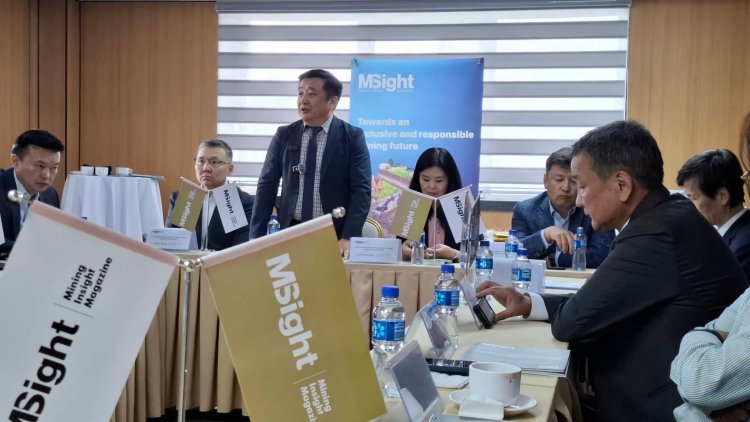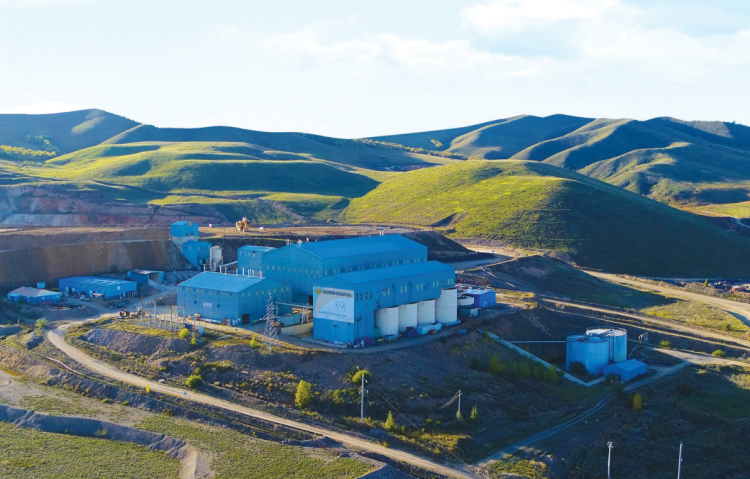


 Every year in early March, the PDAC Convention of the Prospectors & Developers Association of Canada (PDAC) is held in Toronto, Canada. Mining Insight Magazine is pleased to announce that it is serving as an official media partner of the convention for the fourth time. Ahead of the event, we present to our readers an interview conducted by Mining Insight journalist E. Odjargal with Karen Rees, President of the PDAC. By way of brief introduction, Karen Rees is a professional geologist with 37 years of experience in Canada’s mineral exploration sector. In addition to serving as President of PDAC, she is also a board member of three junior exploration projects located in Ontario, Quebec, and Manitoba.
With more than 90 years of history, PDAC has played a significant role internationally. How would you describe its long-term impact?
We’re proud to bring the global mineral exploration and mining community together in Toronto each year for the PDAC Convention. Over time, its impact has come from creating a trusted place for people across the sector to have direct, practical conversations about the issues that shape projects, investment decisions and policy. Those conversations matter. The connections made at PDAC influence where capital flows, how projects move forward and how jurisdictions position themselves in an increasingly competitive global landscape.
Under your leadership, what strategic directions and priorities will PDAC pursue in the coming years?
The focus is on keeping Canada competitive as a place to explore, invest and advance mineral projects responsibly. Maintaining investment momentum depends on policy certainty, particularly for mineral exploration, where stable and predictable frameworks are essential. A top priority is securing long-term investment certainty. That includes improving access to capital, reducing regulatory duplication and delays, streamlining permitting processes, and continuing to invest in public geoscience and enabling infrastructure. Responsible exploration is central to this work. Practical, industry-led tools such as Driving Responsible Exploration help companies manage risk, strengthen environmental, social, and governance frameworks, and build respectful, long-term relationships with Indigenous communities. Talent is another key part of the picture. Attracting the next generation of workers and ensuring students and early career professionals have clear pathways into the industry, opportunities to connect with employers and the skills needed to build lasting careers is essential to the sector’s future.
The 2026 Convention marks the 94th edition of PDAC. What will distinguish PDAC 2026?
PDAC 2026 will build on strong momentum following a year that welcomed more than 27,000 participants from around the world. It will feature the largest trade show in the event’s history. For the first time, Trade Show North will span the entire North Building, bringing the total to more than 1,300 exhibitors. PDAC 2026 will also feature a wide-ranging program, with senior industry leaders and policymakers focused on the challenges and opportunities that are top of mind right now, including investment, supply chains and policy certainty. And as always, the convention is really about the connections. The conversations that start here often carry well beyond the four days in Toronto.
How has PDAC integrated critical minerals and supply-chain resilience into its program?
Critical minerals and supply-chain resilience are woven throughout PDAC 2026 programming because of their growing importance to electrification, energy systems, infrastructure and advanced manufacturing. Rather than being confined to a single stream, these themes appear across multiple program areas, reflecting how central they are to exploration, investment and development decisions. To name just a few examples, the Technical Program includes sessions such as Hiding in Plain Sight: Critical Minerals Recovery from Base Metals, which looks at how existing deposits and processes can contribute to future supply. In the Capital Markets Program, Metal Supply Security: What Would It Take to Reduce Geopolitical Risk? examines the investment and policy considerations shaping global mineral supply chains. The Short Courses Program also addresses these issues through sessions like Geology of Deep and Shallow Porphyry Copper Deposits and Implications for Exploration, highlighting the geological fundamentals that underpin long-term supply.
Have you observed growing engagement from national governments at PDAC?
Yes. Engagement from national and regional governments at PDAC has grown steadily in recent years, reflecting the strategic importance of minerals to economic growth, energy security and industrial policy. PDAC is the most important meeting place on the industry calendar, and governments recognize the value of engaging here as policies, supply chains and investment priorities are actively being shaped.
How do you assess Mongolia’s potential to attract mineral investment?
Mongolia has long been recognized for its geological potential and its position in global mineral supply chains. Its continued presence at PDAC, including initiatives such as Mongolia Day, reflects a clear commitment to engaging international investors and partners. PDAC provides a valuable opportunity to showcase those strengths, share policy priorities and meet directly with decision-makers. Over time, those conversations help build relationships and reinforce investor confidence, supporting Mongolia’s efforts to position itself as a competitive destination for exploration and development.
How would you characterize the current global investment climate for mineral exploration?
There is more momentum than a year ago, supported by stronger commodity prices and increased attention on minerals needed for electrification, infrastructure and economic growth. At the same time, investors remain focused on competitiveness, regulatory timelines and policy certainty. Exploration companies still face real challenges, including access to capital and permitting complexity. That’s why predictable regulatory frameworks and supportive investment environments matter so much. PDAC provides a place to have these conversations openly and to reinforce what is needed to support investment over the longer term.
What recent federal initiatives are aimed at accelerating critical minerals exploration and strengthening supply chains in Canada?
Federal Budget 2025 included several measures aimed at supporting critical minerals exploration and development. One of the most significant is the commitment to establish a C$2 billion Critical Minerals Sovereign Fund to make strategic investments in projects and companies, helping bridge financing gaps and advance priority supply-chain assets. The budget also expands the Critical Mineral Exploration Tax Credit (CMETC) by broadening the list of eligible minerals to include additional elements essential for defence, semiconductors, energy and clean technologies. Together, these measures are intended to mobilize private capital into early-stage exploration and reinforce Canada’s role in securing critical mineral supply chains.
How does Canada channel mining revenues into public and community benefits?
In Canada, mineral development contributes to public and community benefits through employment, taxation, infrastructure investment and long-term partnerships with Indigenous and local communities. Mining revenues support public services, while projects themselves often create lasting economic opportunities at the regional level. When projects are developed responsibly and in partnership with stakeholders, those benefits can extend well beyond production and support stronger, more resilient communities over time.
Mining Insight Magazine, 2026 №01 (050)