

E. MISHEEL
misheel@mininginsight.mn
- If the Law on Free Zones includes a clause on air corridors connecting with third neighbors, Mongolia could open the cadastral door to the critical minerals sector –
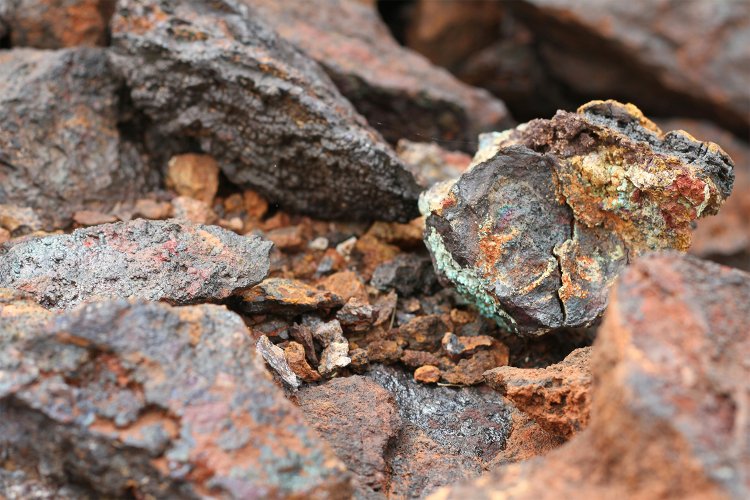
With the global energy transition accelerating, demand for critical minerals has surged. For some metals, demand is projected to double or even increase tenfold. Disruptions caused by the war in Ukraine, instability in Africa, and China’s dominant position in supply chains have underscored the urgent need for new and reliable sources. In August, the RAND Corporation analyzed the challenges facing the U.S., Japan, and South Korea in establishing stable critical mineral supply chains. According to the study, critical minerals such as molybdenum undergo multiple trade transitions rom extraction to third- and fourth-stage processing making the trade flow far more complex than conventional commodities like fuel. To illustrate, oil is extracted, refined, and exported typically passing through only two or three countries before reaching the end consumer. In contrast, molybdenum may be mined in one country, refined in another, and then further processed elsewhere before being incorporated into a final product. This multi-layered, fragmented value chain is one of the defining challenges of the critical minerals trade.
Moreover, unlike oil, critical minerals are not end products themselves they form components within larger technologies, such as electric vehicles or renewable energy systems. These complexities mean that traditional diplomatic and trade frameworks are insufficient for governing critical mineral flows. As M. Dagva noted, the U.S. and Saudi Arabia can negotiate directly over oil, but such bilateral arrangements are impossible for critical minerals. Even if the U.S. purchases Mongolia’s molybdenum, that alone does not ensure supply chain security. Critical minerals require multi country integration, where each nation contributes specific materials molybdenum from Mongolia, copper from Chile, cobalt from Congo to produce a single electric vehicle. Wars, internal conflicts, and instability in various countries are hindering the transition to clean energy. In addition, the high-level trade war between the United States and China is further increasing risks in this sector. Under such circumstances, how can countries that manufacture clean technologies and equipment ensure the reliability of their raw material supply? On the other hand, countries like Mongolia, which aspire to participate in raw material supply, face the question of where to export their resources. Previously, producers of ores and concentrates and automobile-manufacturing countries were connected through China. However, today, due to trade sanctions and various international circumstances, a new challenge has emerged: how can miners, processors, and final product manufacturers remain interconnected? Amid these diverse challenges, the key question for Mongolia is how to enter the global critical minerals environment.
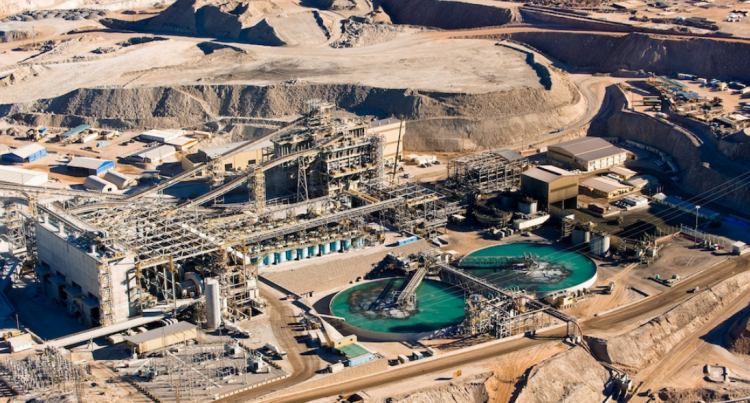
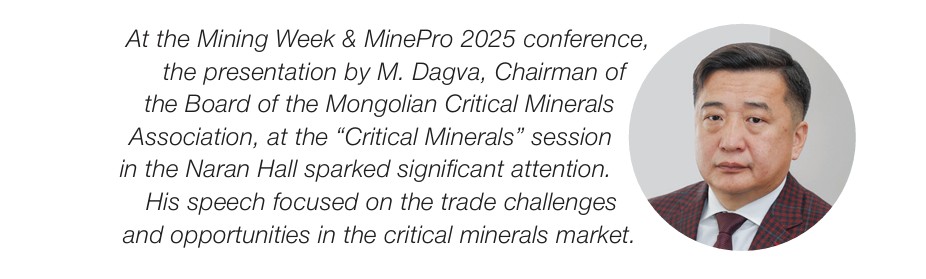 Five to ten years ago, we used to say that Mongolia was not as influential as Chile, which supplies a significant share of the world’s copper reserves. We wondered how a non-monopolistic country could operate. For instance, Indonesia dominates most of the nickel supply chain, and the Congo supplies the majority of cobalt. Yet, it was said that Mongolia could not formulate policies at that level. Now, however, among the 20–30 elements classified as critical minerals, Mongolia is commissioning underground mines that could place it among the leading copper producers globally. Once the second and third mines are opened, the country could establish a strong position as a copper supplier. Another example is uranium Mongolia ranks relatively high in proven global reserves. We have already reached concrete agreements and sent a clear message that Mongolia is entering the uranium sector. In the case of fluorspar, Mongolia leads in reserves and benefits from high-grade deposits. In summary, the current situation of Mongolia’s critical minerals looks like this: while the starting point is still modest in terms of data and figures, future exploration, research, and the discovery of new deposits will strengthen Mongolia’s position in the global critical minerals field. If we lack sufficient strength to play on an international level, we must at least understand what potential we possess beyond what we have today. However, domestic investment is limited. Therefore, our path forward lies in bilateral and trilateral international cooperation and regional collaboration. We could establish joint economic clusters with our two neighboring countries. Especially with our southern neighbor, which already imports Mongolia’s traditional minerals, there is an opportunity to collaborate with China’s critical minerals industry to create cross-border industrial parks, providing new spaces for cooperation. However, this idea has not yet been actively discussed. Our association sees this as a major opportunity. Although Mongolia is landlocked, collaboration with our southern neighbor could unlock untapped potential that has yet to be recognized or utilized. Mongolia also has a Third Neighbor Policy, which is a very interesting strategy.
To balance relations between our two neighbors, engagement with a third neighbor is necessary. Within this framework, Mongolia has established successful diplomatic relations with the United States, Europe, Japan, South Korea, and Australia. Yet, one major issue remains: our economy is heavily dependent on our two neighbors. For example, we rely on our northern neighbor for explosives, fuel, and lubricants. More than 90 percent of our exports come from mining, and most of these exports go to our southern neighbor. So, what opportunities can critical minerals create for us? They can help strengthen economic linkages with third neighbors. Mongolia has resources, while our partners suffer from the problem of ensuring stable critical mineral supply chains. If third neighbors can solve this issue through cooperation with Mongolia, our problem becomes their problem creating mutual interest. A clear example is uranium: no Mongolian worries about how to export uranium to France because the French have already solved that issue, we have entrusted it to them. This model could also be applied to critical minerals in the future. Currently, Mongolia cooperates with the United States and South Korea in the critical minerals sector. The European Union also has policies to ensure access to critical raw materials without political bias. If Mongolia aligns its policies with those frameworks, it could build stronger connections with the EU in the field of critical minerals. In summary, there is no reason to fear that Mongolia cannot develop its critical minerals sector. The real question is whether we will remain content with the memorandums of understanding we have already signed or whether we will push forward to reach a higher level. That depends entirely on us. Since Mongolia cannot yet speak strongly on the international stage with its current capacity, our Mongolian Critical Minerals Association is recommending to the Ministry of Industry and Minerals Resources that it should enable fundamental research and exploration. Among critical minerals, copper stands out as an internationally attractive and economically viable resource that could eventually replace coal in significance. Yet our current ambition remains limited. We are following a passive policy, merely waiting for projects like Erdenet and Oyu Tolgoi to produce around half a million tons combined. Our association proposes to set clear targets 1 million tons by 2030 and 1.5 million tons by 2035 and to design policies starting from these goals and working backward to determine what needs to be done to achieve them. If the bottlenecks in rare earth processing are resolved at the government and state owned company levels, the private sector will be able to handle exploration and mining operations efficiently.
Although Mongolia leads in fluorspar exports, merely maintaining that position without ambition is insufficient. The solution lies in advancing one level up in processing establishing mid-level industrial production that adds value to fluorspar. Countries in North America and Europe, with democratic governance and strong human rights records, prefer to source raw materials from nations that align with their legal and ethical standards. This gives Mongolia a unique opportunity. Although large-scale investment and effort are needed, this goal is achievable over time. If Mongolian enterprises integrate ESG principles into their operations, they will gain additional advantages. Moreover, if the Free Zone Law includes provisions for air free zones connected with third neighbors, Mongolia could open a new cadastral gateway into the critical minerals sector. Rather than merely being known as a resource-rich country, Mongolia should aim to become a strategic partner that collaborates at the level of its partners’ needs. Since discussions on critical minerals began, Mongolia’s engagement has primarily focused on third neighbors. However, as our colleagues observe, critical minerals should not be seen as a matter of polarization there are opportunities to cooperate with both neighbors and third neighbors alike. Once these measures are implemented, Mongolia will begin to gain weight and influence in the newly forming global critical minerals network. As that influence grows, the country will be able to negotiate from a stronger and more advantageous position. This, in turn, will help Mongolia diversify beyond mining and attract investment into other economic sectors as well.
Mining Insight Magazine, №10 (047) 2025