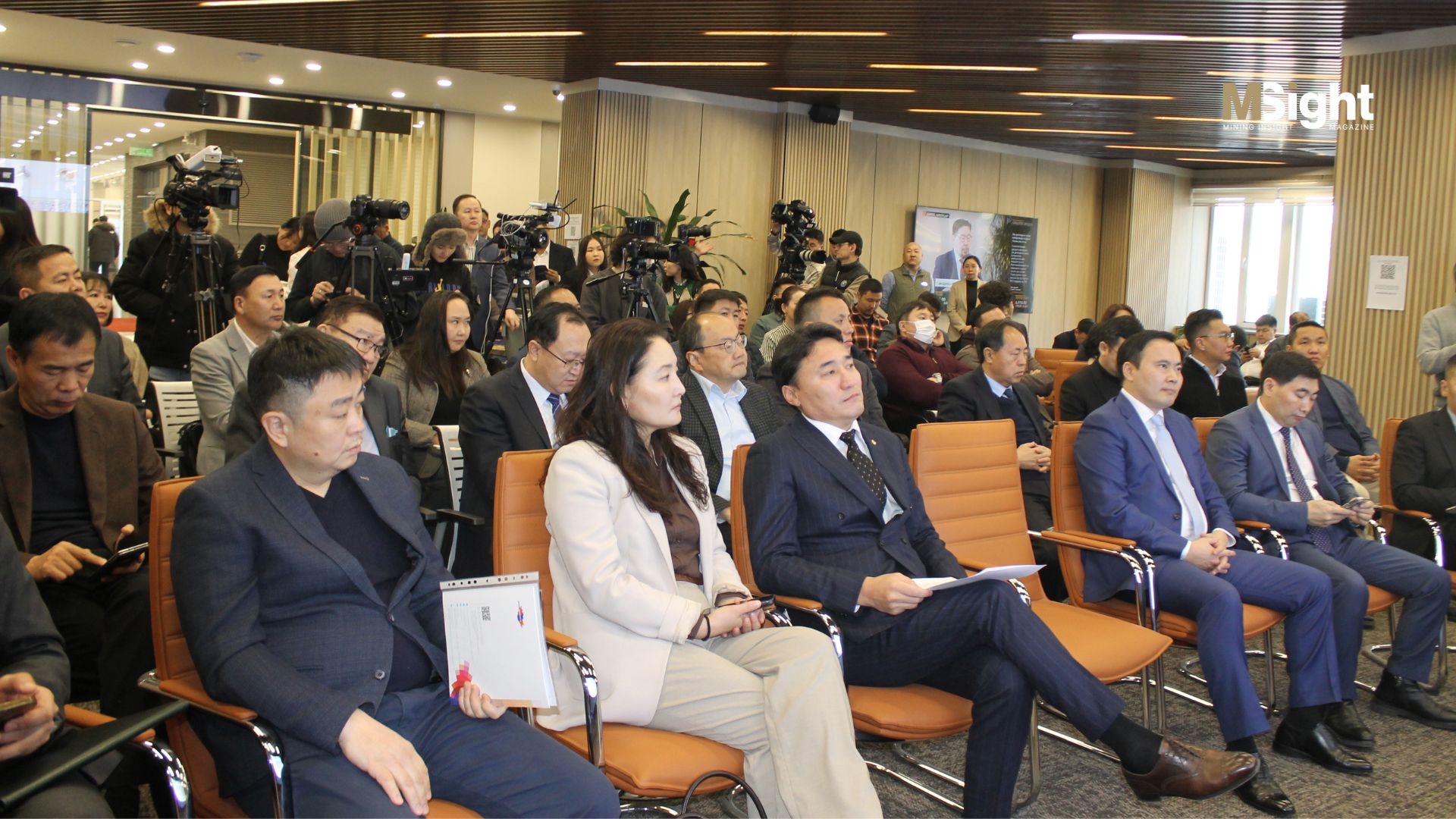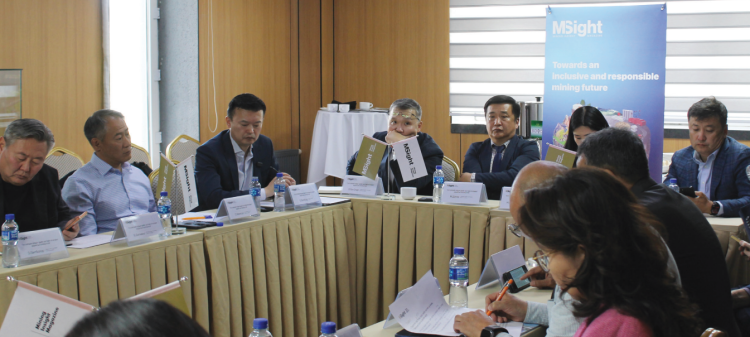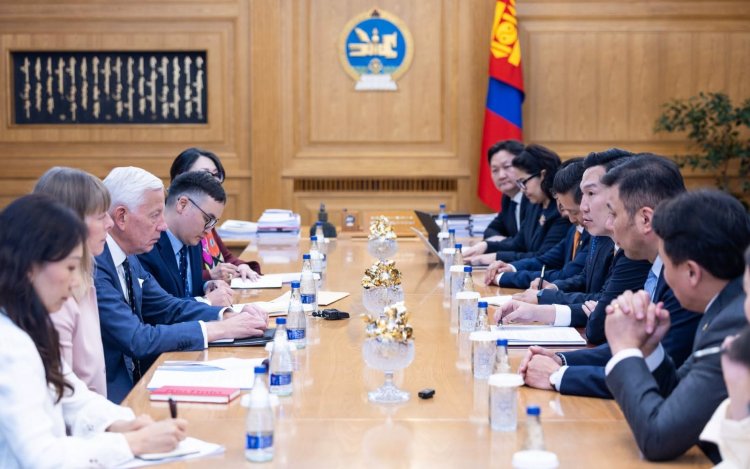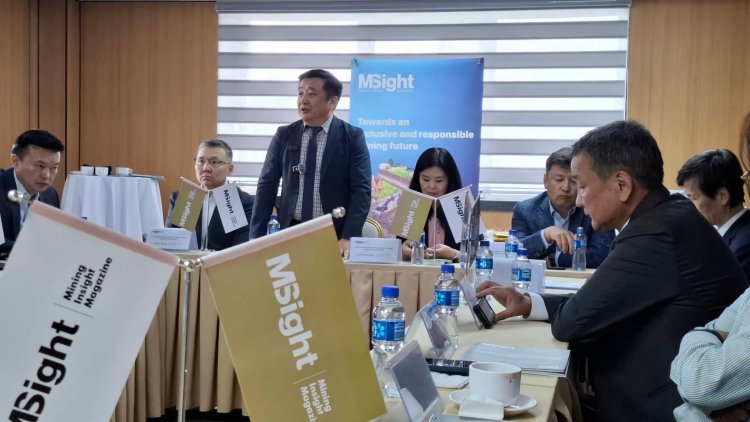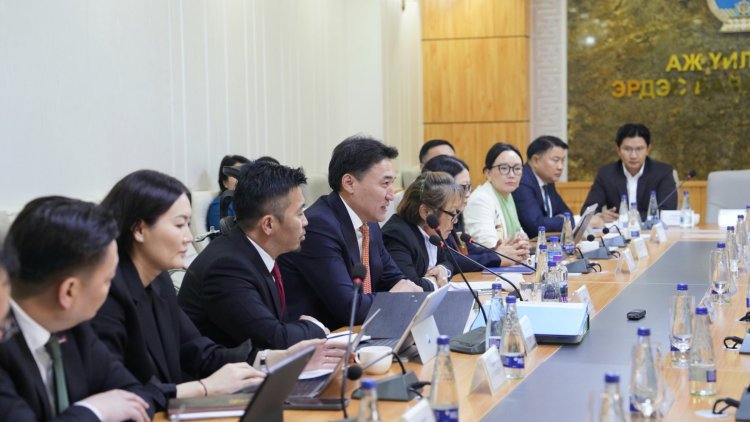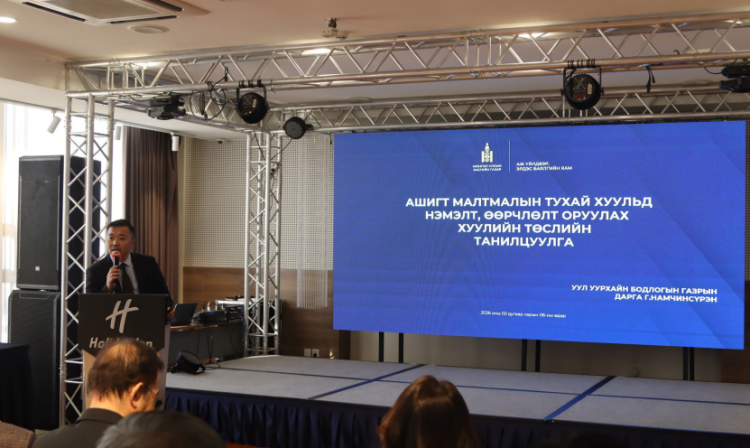


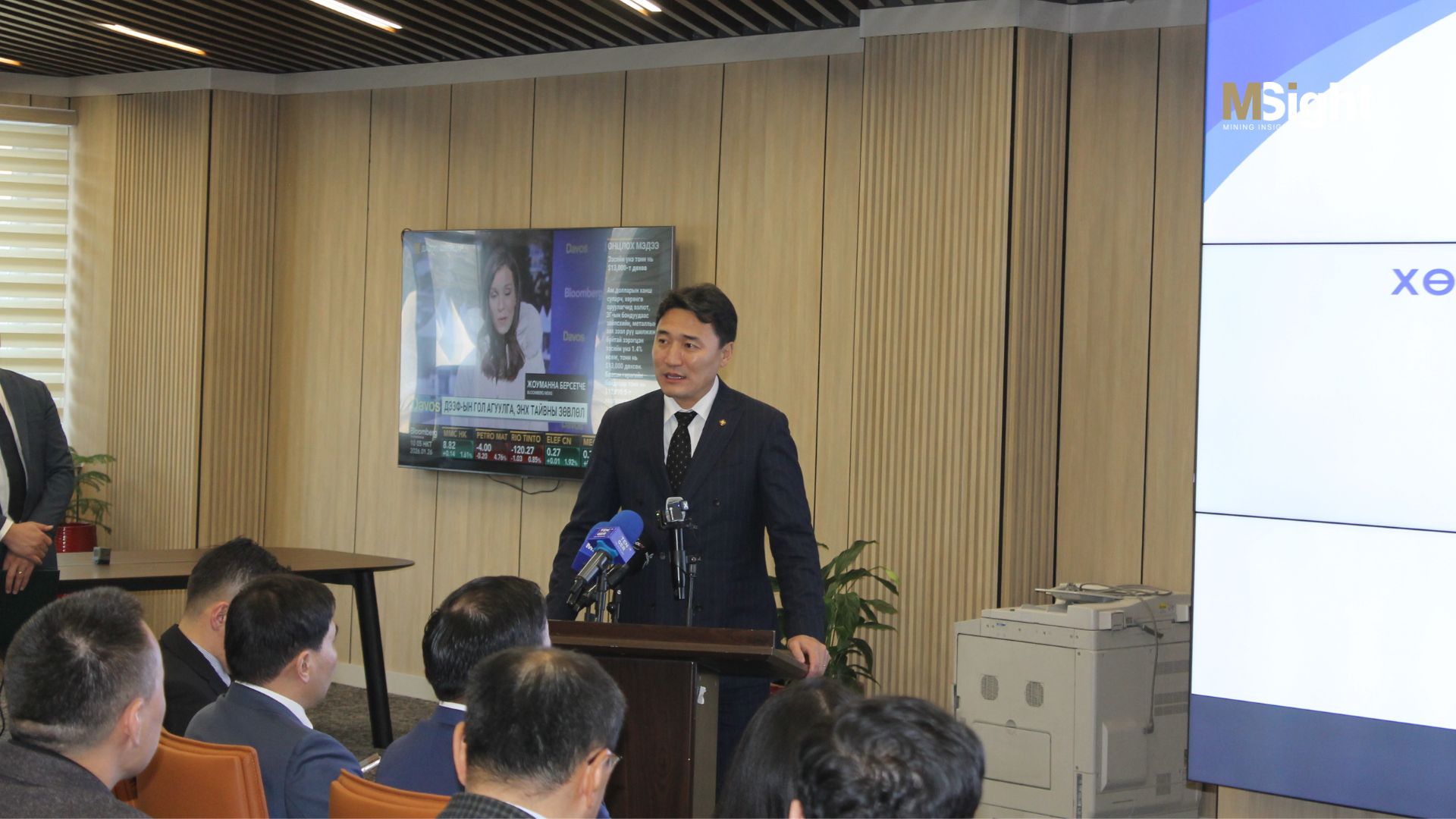
By decision of Prime Minister G. Zandanshatar, an Investor Protection Center has been established under the Ministry of Economy and Development. The Center held its first official activity last week in cooperation with the American Chamber of Commerce in Mongolia. Building on this initiative, the “Mining Sector Week” officially began today (26 January 2026). The event aims to assess the current investment climate in Mongolia’s mining sector, identify key challenges, and present policy proposals and solutions to support and revive investment.
Opening the event, Deputy Minister of Economy and Development S. Davaasuren highlighted that mining sector revenues reached approximately USD 70 billion between 2022 and 2024, an amount equivalent to Mongolia’s total GDP for the period 2005–2015. “This clearly shows that Mongolia remains a country heavily dependent on mining,” she said. “There is an urgent need to diversify economic growth, particularly by developing mining-based industrialization and expanding other business sectors. The Investor Protection Center was established precisely to support this objective.”
Minister of Industry and Mineral Resources G. Damdinyam emphasized that Mongolia has, for the first time, incorporated regulations on critical minerals into its legislation an issue now at the center of global attention. “Previously, the sector followed a single, uniform policy approach. In reality, mining success requires differentiated policies tailored to each raw material,” he said.
He noted that Mongolia’s economy is currently overly dependent on coal. While the global mining sector has an annual turnover of around USD 850 billion, Mongolia—despite being a significant player—remains reliant on a single commodity. When coal prices fall, the entire economy follows,” he said. “We must create a second and third engine of growth.” According to the Minister, copper should become the second pillar of the sector, followed by rare earth elements and rare metals. He pointed out that the global copper market, valued at USD 450 billion, continues to expand.
He also stressed the need to reform the distribution of mineral royalty revenues by allocating a direct share to local communities. Rising resistance at the local level, particularly in provinces such as Khovd and Dornod, cannot be addressed through enforcement or penalties alone. “Nearly half a trillion tugriks in royalties are collected annually, much of it generated by South Gobi, especially Tsogttsetsii and Khanbogd. Yet schools in these areas are collapsing. Local frustration is justified,” he said, questioning the fairness of equal public investment between mining and non-mining provinces.
The Minister further noted that globally, baseline geological surveys are financed by state budgets to attract investment. Mongolia, however, continues to rely on exploration data collected before 1990. Major deposits such as Oyu Tolgoi, Tavan Tolgoi, and Erdenet originate from that period. “Since then, Oyu Tolgoi has been the only major discovery. Without renewed exploration, no new large deposits will emerge,” he warned, adding that rising resource nationalism has hindered progress.
Minister of Economy and Development J. Enkhbayar emphasized that Mongolia’s small domestic market of 3.5 million people makes economic expansion and policy reform unavoidable. “To grow the economy, we need investment or exports,” he said, noting Mongolia’s agreement with the Eurasian Economic Union. “Investment, particularly in mining is the key driver of domestic economic expansion.”
He acknowledged that mining investment has stagnated due to declining investor confidence, political instability, and regulatory uncertainty. “The government’s slogan ‘New Trust – Bold Reform’ reflects our understanding that trust must be restored before economic recovery can occur,” he said. “That requires decisive reform.”
Speakers at the event noted that foreign direct investment has declined by 20–30 percent year-on-year, largely due to reduced mining investment, including issues related to Oyu Tolgoi and exploration licensing. They also emphasized that currency stability plays a critical role in attracting and retaining investors.