

 INSIDE MONGOLIA’S MINING: ACHIEVEMENTS, CHALLENGES, AND WHAT’S NEXT
As 2025 draws to a close, it’s time to look back on the past year’s milestones and hurdles in Mongolia’s mining sector—and forward to what lies ahead. Mining Insight asked the country’s leading mining executives about last year’s performance and next year’s strategies, revealing not just company successes and challenges, but also offering an essential lens on national budget impacts, sector trends, and investment directions.
Erdenet Mining Corporation sets a new all-time record
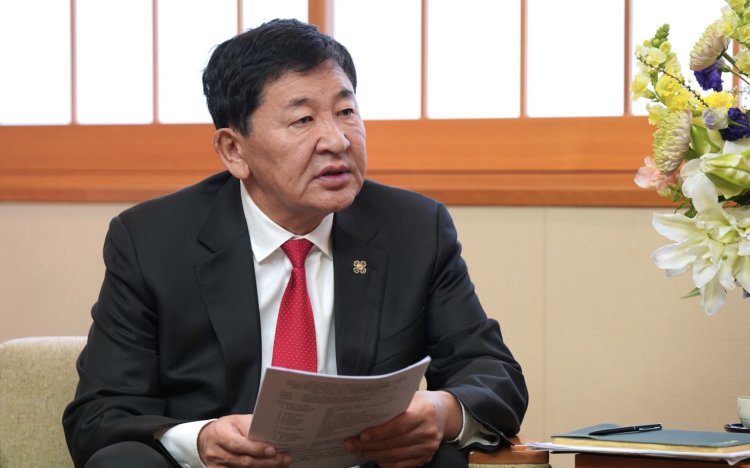
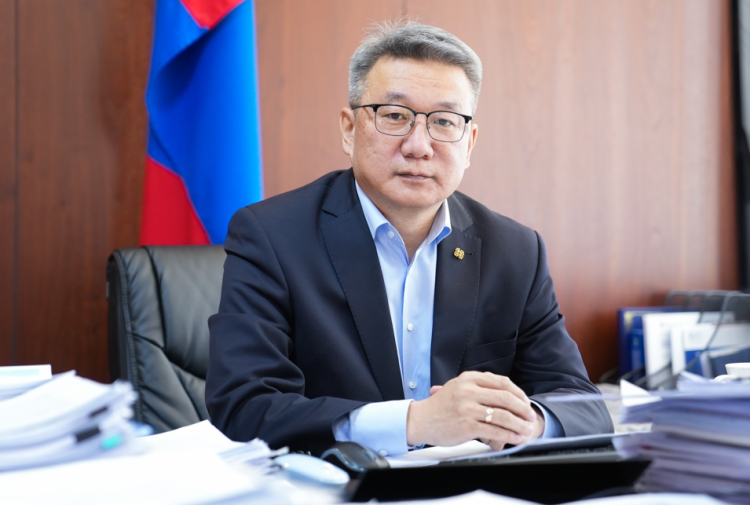
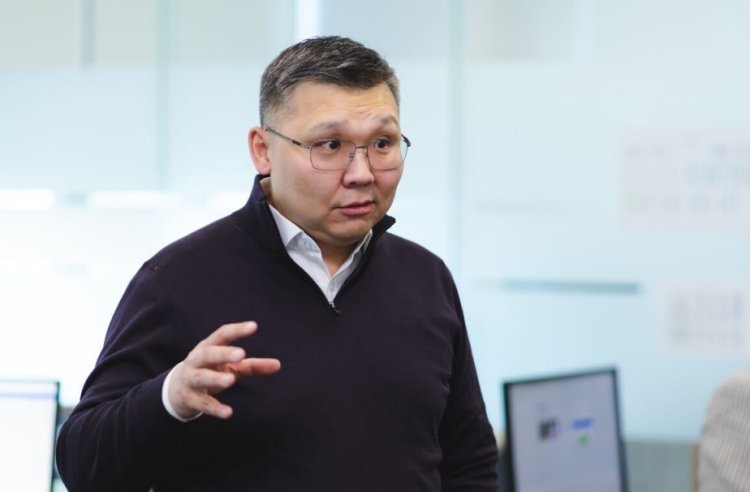
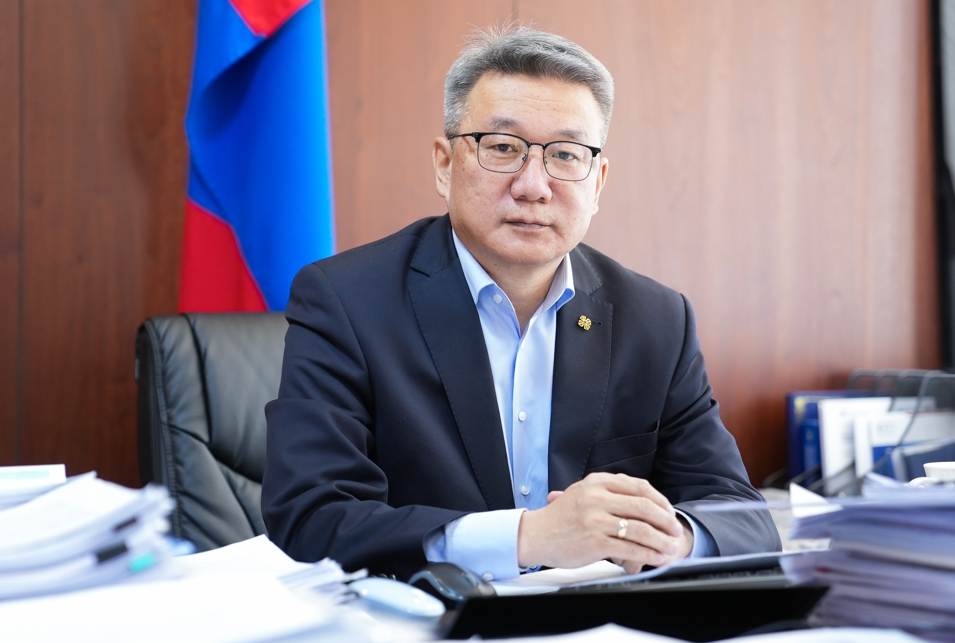
G. Yondon, General Director of Erdenet Mining Corporation SOE
How would you describe 2025 for Erdenet Mining Corporation? What were the key achievements, and what challenges did you face?
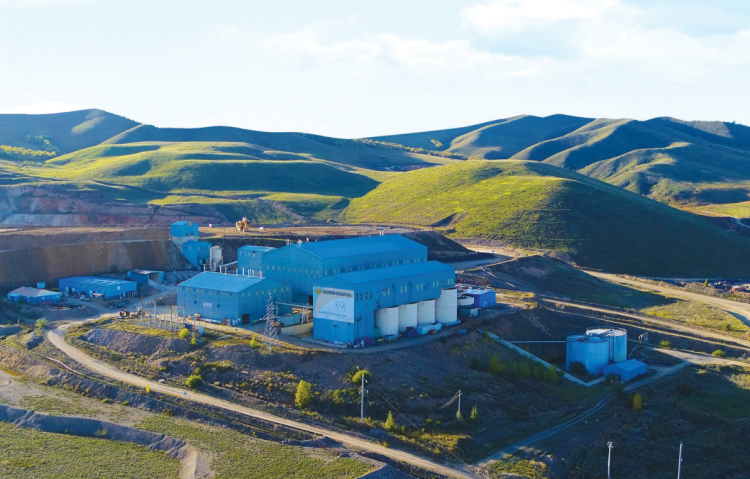
2025 will go down in the history of Erdenet Mining Corporation as a year of exceptional achievement. This year, the company mined 47.1 million tonnes of ore and processed 39.9 million tonnes, the highest figures recorded in its 47 year history. As a result, 574,000 tonnes of copper concentrate were produced and exported. Sales revenue reached an all time high of MNT 4.6 trillion, with USD 1.2 billion transferred to the Bank of Mongolia. A total of MNT 2.2 trillion in taxes was paid to the state and local budgets, and the company is currently operating with no long-term liabilities. One of the most notable outcomes of 2025 was real cost savings. Previously, out of every tugrug in revenue, 75 tugrugs went to costs and 25 to profit. This year, costs fell below the 75-tugrug level, leading to a marked improvement in profitability. According to an updated geological resource estimate completed in 2024, Erdenet now has the potential to operate for another 55 years.
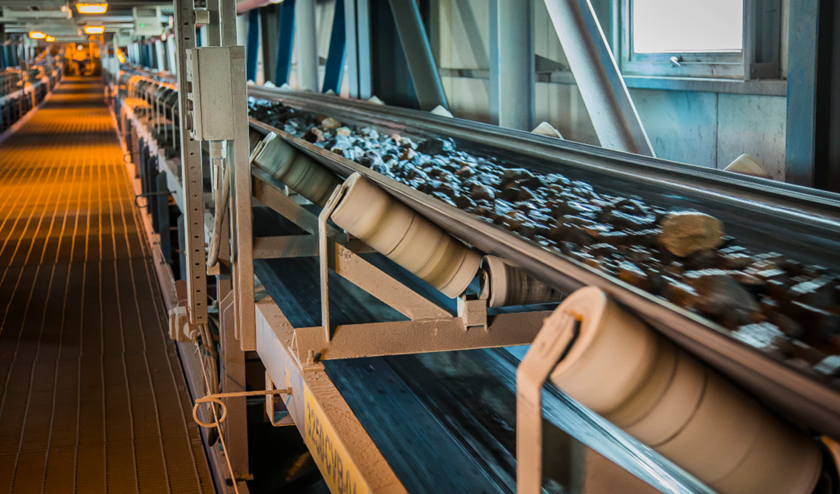 If additional reserves from the Oyut deposit are confirmed, the mine life could be extended to 65-75 years. In line with this outlook, we launched the Phase I upgrade of the ore preparation line to modernise the concentrator. This involves extensive underground excavation and concrete works equivalent in scale to an eight- to nine-storey building. We have also begun construction of a new tailings storage facility using advanced thickened tailings technology. As more than 98 percent of the ore we mine is transferred to the tailings system, tailings management is a critical component of our operations. Accordingly, in February 2025, a government resolution designated over 8,000 hectares across Orkhon and Bulgan provinces for special use as a tailings facility. In addition, under four major projects related to water supply, power supply, roads, and railways for the Industrial and Technology Park, the total investment reached USD 68 million. The water supply and railway projects have been fully completed and accepted by the State Commission. Road construction is more than 60 percent complete, while the power supply project, delayed due to a tender dispute, has now reached around 30 percent completion. In August 2025, the feasibility studies for a copper smelter and refinery, as well as a copper wire and cable plant, based in Erdenet, were approved by the Mineral Resources Professional Council. These studies were notable for incorporating a pilot elemental sulphur plant. An open international tender has been announced to select a strategic investor, with invitations extended to global investors. Erdenet is technically ready to produce sulphuric acid, and demand is emerging from major domestic projects, including Badrakh Energy, Oyu Tolgoi, and the Bor-Undur Industrial and Technology Park. Since 2022, we have invited the international “Big Four” audit firms Deloitte, PwC, KPMG, and Ernst & Young to work with us. Our financial statements for the past three years have been audited by KPMG, and our mineral resources have been evaluated in accordance with the JORC standard. These are concrete steps toward becoming a publicly listed company and preparing for an IPO. Following recommendations from KPMG and the National Audit Office, an asset valuation was conducted, confirming total assets of approximately MNT 6.7 trillion. Over the past four years, the average ratio of net profit to total assets has stood at 11.6 percent, which we consider a solid and stable performance indicator. In 2025, Erdenet began implementing Canada’s Towards Sustainable Mining (TSM) standard, becoming the first state owned company in Mongolia to do so. As part of this effort, we hosted the International TSM High Level Meeting at Erdenet on 10 September. Senior representatives from the Mining Association of Canada and the China Mining Association attended, providing specialised training and guidance. In 2026, our progress in implementing the TSM standard will be validated by international experts and auditors.
What are the company’s main objectives for 2026?
Our primary objective for the coming year, as a 100 percent state-owned enterprise, is first and foremost to fully deliver on our 2026 business plan and target indicators, and to ensure the stable transfer of revenues to the state budget in the form of taxes, fees, and payments, as well as dividends to the Savings Fund. In addition to these obligations to the state budget, we plan to commence construction of the copper smelter project being implemented in project form, and to continue works on the Phase I ore preparation line, the thickened tailings technology, and the construction of the tailings storage facility.
Our 2026 investment plan has been calculated in detail. By prioritising and optimising investment activities that have averaged MNT 1.1–1.2 trillion annually over the past four years, the approved investment volume for 2026 was set at MNT 776 billion. We began planning the 2026 investment program early, starting in March 2025.
At that time, all of our departments and units submitted what could be called their “wish lists.” In April, these proposals went through an initial screening and were ranked and streamlined based on factors such as previously completed works, economic calculations, studies, and investment payback periods. On 1 May, the investment list was finalised. We then approved an investment ceiling of MNT 700 billion, carried out feasibility studies, marketing research, and design work, and gave final approval on 1 August. The reason for this approach was that, as one of the Government’s mega projects, the copper smelter project will inevitably place a certain financial burden on us. We therefore calculated how much we could realistically reduce our investment spending and, from three scenarios, selected the MNT 700 billion option. However, in October, due to factors such as unsuccessful tenders for some projects planned in 2025, complaints that resulted in their rollover into 2026, and unexpected additional costs arising from government decisions such as wagon leasing, it became necessary to increase the originally planned 2026 investment by MNT 76 billion. As a result, costs related to the copper smelter project are not yet included in the approved investment plan. In other words, we have deliberately left room for them. It is clear that the level of financial burden on Erdenet will depend on how and to what extent we cooperate with the investor, and on the shareholding that Erdenet Mining Corporation will hold in the copper smelter project. We expect that the scale of investment required for the copper smelter will become clearer and be finalised in the first half of 2026, based on the outcomes of negotiations and contracts to be concluded during that period.
How do you assess the market outlook for next year? What key trends are you observing?
Every year, major global forums are held where copper price outlooks are discussed and finalised. These include London Metal Exchange (LME) Week held in October, LME Asia Week in Hong Kong in May, and Chile’s Copper Week (CESCO), among other international events. In addition, we receive advice from analysts at global financial institutions such as Wood Mackenzie and Goldman Sachs. Based on all of these inputs, we calculate our copper price assumptions. Relying on research and recommendations from reputable international institutions and analysts, we have calculated the copper price for 2026 at USD 9,653 per tonne. This figure is intended to avoid creating excessive expectations or risks on the revenue side of the state budget. It is a realistic and conservative lower-bound estimate, rather than an overly optimistic one. Using inflated assumptions can create budgetary risks and significantly affect the company’s economic indicators. In 2025, we calculated the copper price at USD 9,486, whereas the state budget projection was USD 10,000, resulting in a difference of more than USD 500. For 2026, based on the recommendations of international analysts and forecasts from 28 major financial institutions, we set the copper price at USD 9,653. In comparison, the state budget uses a figure of USD 9,700, meaning the difference this time is only around USD 50. As of late 2025, today the copper price has reached USD 12,000, driven by several objective factors. First, technical incidents occurred at several major copper mines worldwide, including Kamoa-Kakula, El Teniente, and Grasberg. As a result, global copper supply has faced a shortfall of approximately 550,000 tonnes of refined copper, creating what is referred to as a deficit. The current price level of USD 12,000 is likely to decline after a certain period. However, analysts believe that during 2026, the price may reach the USD 12,000 level several times. In terms of market trends, one notable development is that the benchmark treatment and refining charges (TC/RC) are likely to settle around zero. This is a positive and profitable situation for mining companies, while it suggests a more challenging year ahead for smelters and refiners. In particular, smelting operations that do not own mines or secure raw material sources and operate independently are likely to face significant difficulties.