

 E.MISHEEL
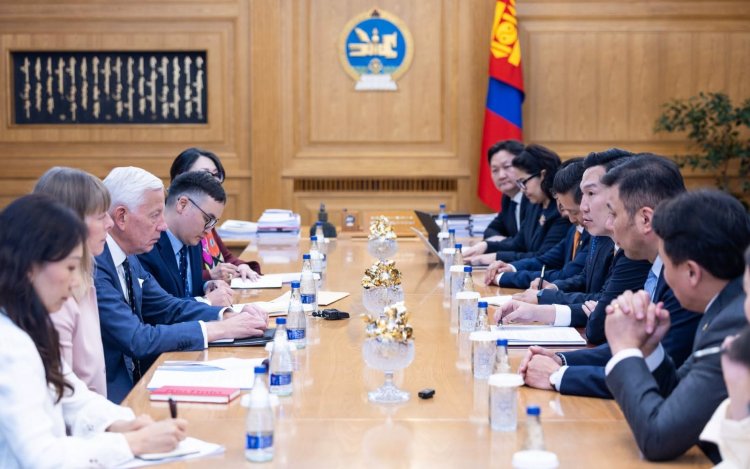
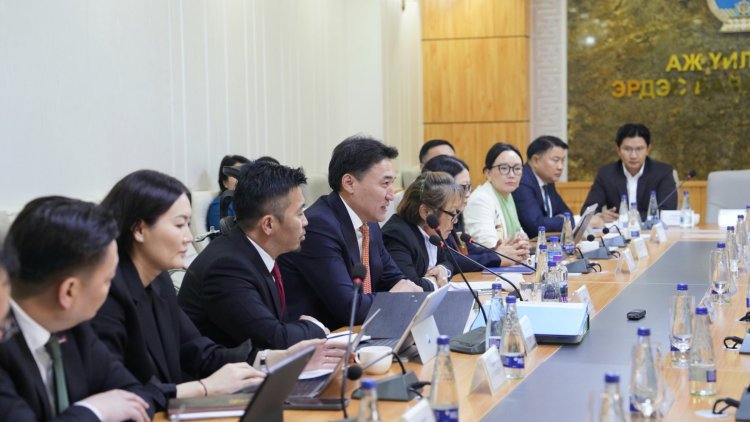
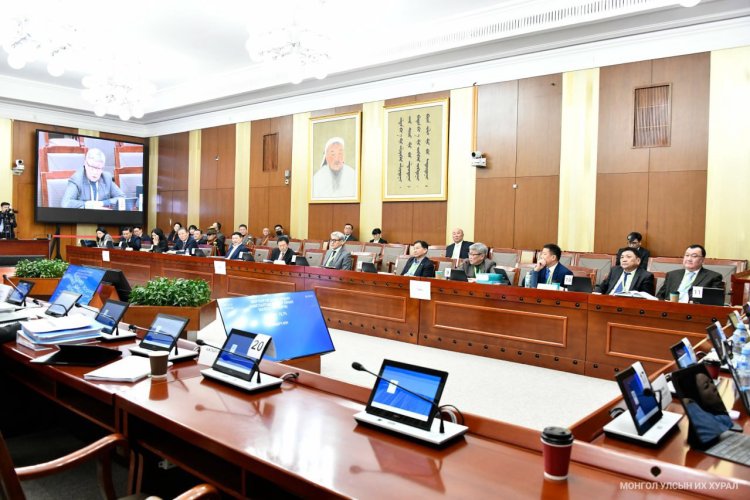
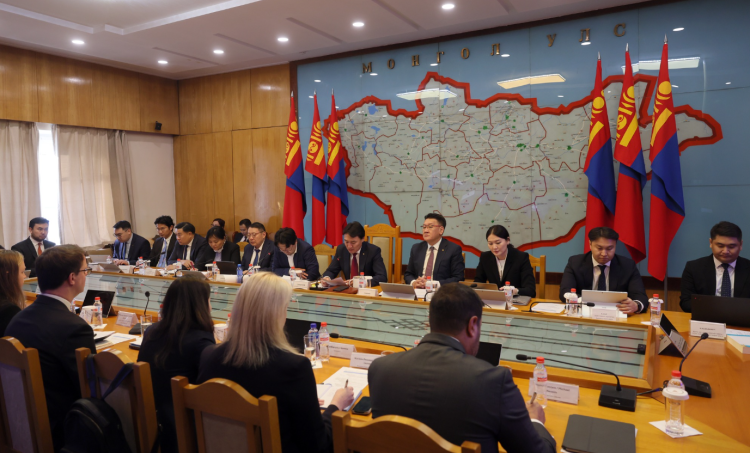
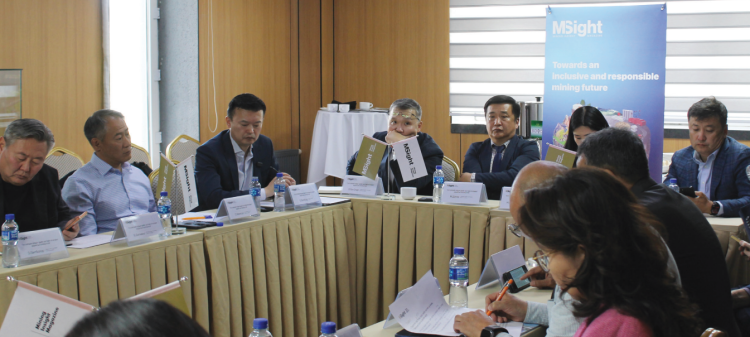
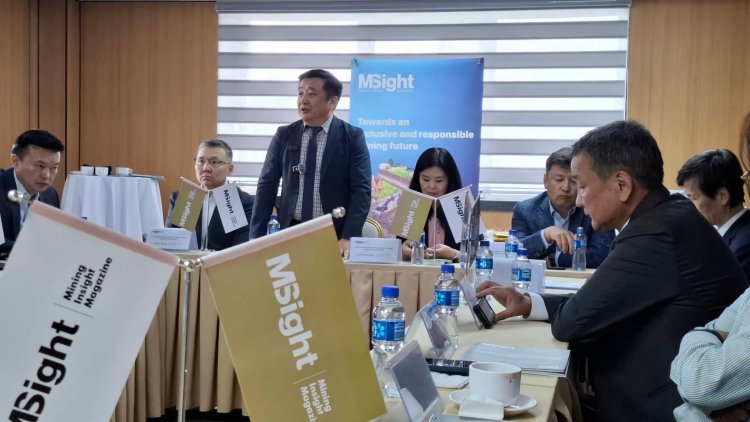
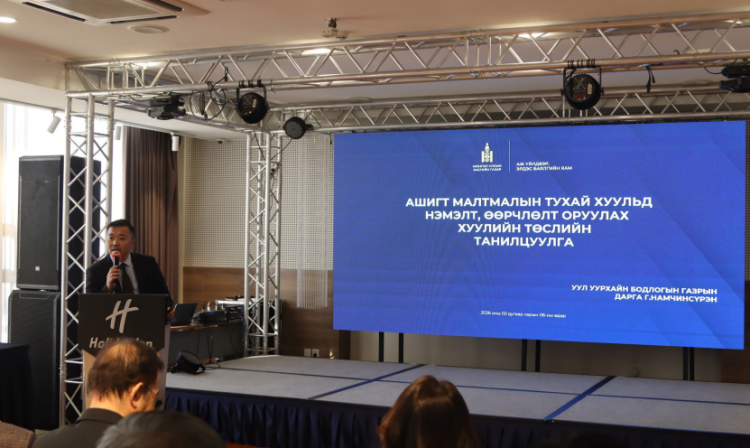
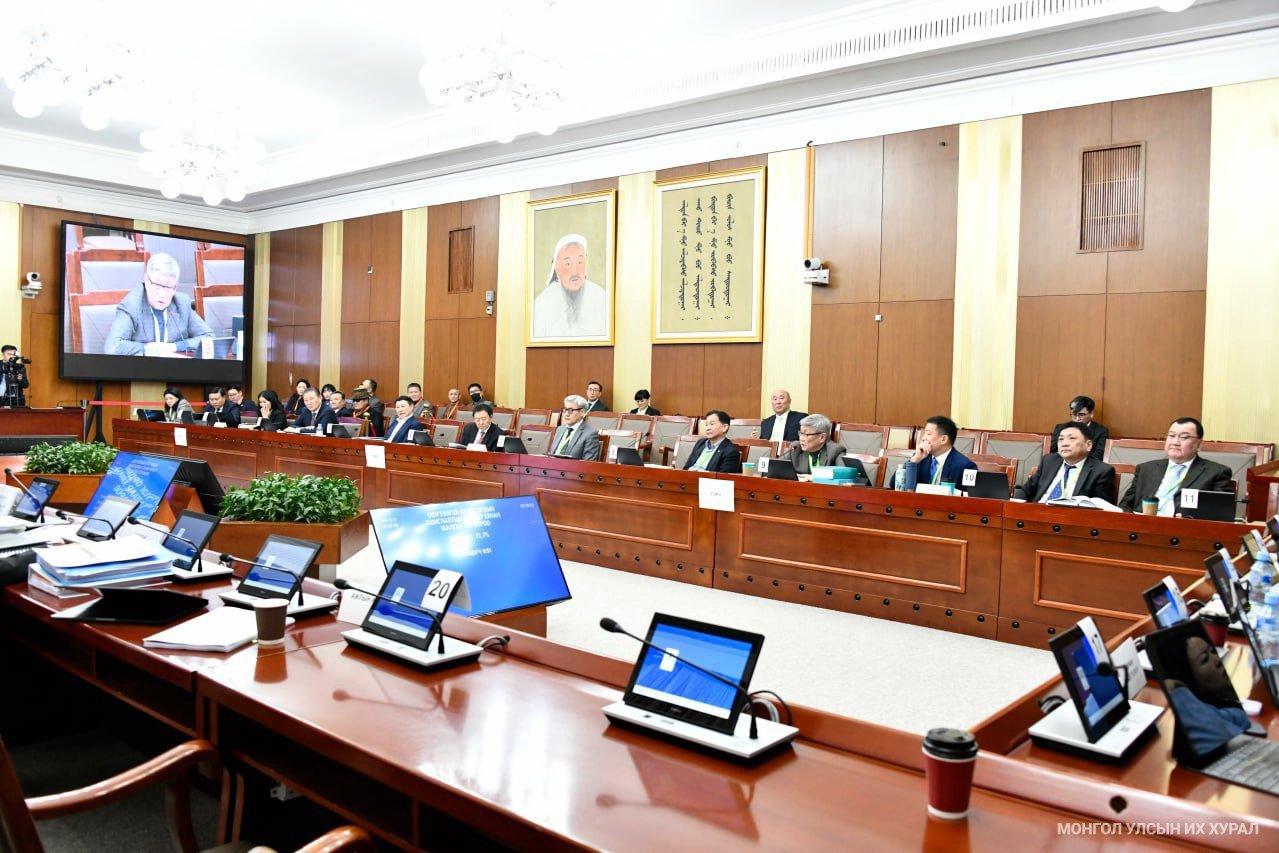
From December 12–16, the Parliamentary Oversight Working Group (POWG), established by the State Great Khural (Parliament) to monitor documents and activities related to the exploitation of the Oyu Tolgoi deposit group and to ensure Mongolia’s interests and benefits, held a public hearing. The hearings were broadcast live nationwide, revealing extensive documentation and information on the Oyu Tolgoi project and providing answers to previously unclear questions. Participants included officials who signed the Oyu Tolgoi Investment Agreement (IIA), government ministers, and parliamentarians involved over the past 16 years in Oyu Tolgoi agreements and oversight working groups.
During the hearings, two main issues drew particular attention. First was the matter of the loans Oyu Tolgoi receives from Rio Tinto, including loan amounts, interest rates, and ways to maximize Mongolia’s benefits. Second was the history of two mining licenses held by Ontre, the potential for the Government to enter into a separate Investment Agreement with Ontre, and whether the tax incentives and stabilization provisions in the Oyu Tolgoi IIA would apply to Ontre. In other words, the POWG deliberated whether there is a legal or practical basis for amending the Investment and Shareholders Agreements between the Government and Rio Tinto. However, current government officials, including the ministers directly involved in negotiations with Rio Tinto, were not present at the public hearings. The issues related to Oyu Tolgoi’s loans, interest rates, and management fees are governed by the Shareholders Agreement. Ongoing official negotiations between the Government and Rio Tinto to reduce interest and management fees could allow for certain amendments to this agreement.
Some level of understanding has already been reached, and relevant information has been made public. However, views diverge regarding whether Ontre and its two mining licenses should be transferred to Oyu Tolgoi, and whether the Government can fully collect taxes from Ontre’s resource extraction under current legislation. If a separate Investment Agreement is signed with Ontre that is legally independent from the Oyu Tolgoi IIA, this could potentially necessitate amendments to the Oyu Tolgoi IIA itself.
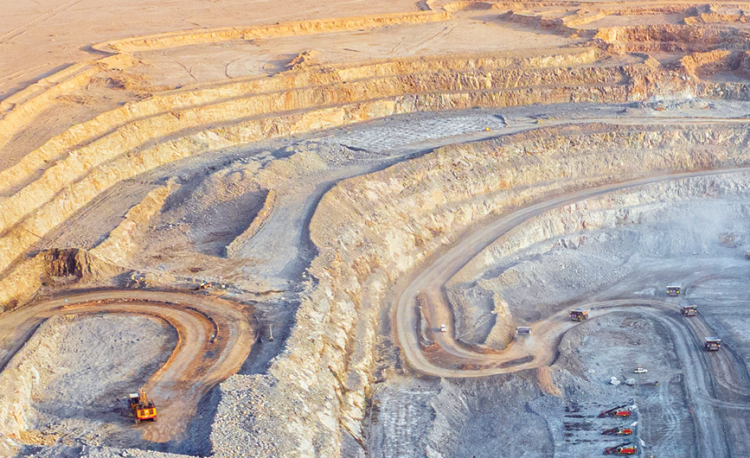
OYU TOLGOI: ONE DEPOSIT, ONE MINE, ONE COMPANY
POWG members and other participants emphasized that the Oyu Tolgoi project has a substantial positive impact on Mongolia’s economy and expressed support for long term cooperation with Rio Tinto. However, they stressed that issues related to Ontre should be treated separately from the Oyu Tolgoi IIA. According to POWG experts and information provided by Oyu Tolgoi, the mineral reserves of Ontre’s licenses—the extensions of the Hugo North deposit and the Heruga deposit—should be considered part of the Oyu Tolgoi group (Hugo North, Hugo South, and Oyu deposits). Experts noted that Oyu Tolgoi constitutes a single geologically formed deposit group, with a single origin and subdivided only by mining licenses. The extraction technologies and methods are interconnected, and a single company—Rio Tinto—operates the group. They also highlighted that Ontre has potentially failed to fulfill some of its legal obligations as a license holder and outsourced some operations, possibly violating relevant laws. Consequently, transferring Ontre’s licenses to Oyu Tolgoi or signing a new Investment Agreement with Ontre would be a complex matter requiring careful legal and operational arrangements.
HISTORICAL BACKGROUND OF ONTRE LICENSES
In 2003, Ontre purchased the “Javkhlant” (3150X) and “Shiveetolgoi” (3148X) exploration licenses for a total of USD 10.5 million. License extensions were granted in 2004, 2006, and 2007. Experts highlighted several concerns, including whether these extensions complied with the law and whether the required documentation to convert exploration licenses into mining licenses was completed. For example, in 2007, Ontre’s license renewal request satisfied certain certification and environmental plan requirements but did not fully comply with reporting, work expense, or payment documentation obligations. Furthermore, payments made by Zata LLC on Ontre’s behalf were inconsistent with the Minerals Law. These issues, along with Ontre’s failure to conclude pre-mining agreements with the relevant government agencies, led POWG experts to conclude that legal compliance was uneven.
KEY ISSUES FOR NEGOTIATIONS WITH ONTRE
According to POWG members and officials, a potential Investment Agreement with Ontre would likely: operate independently of the Oyu Tolgoi IIA; not extend the tax stabilization benefits granted under Oyu Tolgoi’s IIA. S. Bayartsogt, the former Working Group chair who helped establish the Oyu Tolgoi IIA, emphasized that collecting all currently enforceable taxes from Ontre, including escalating or special royalties, could increase Mongolia’s benefits. This view drew significant attention, as Ontre’s licenses and associated reserves have historically been treated by Rio Tinto and Oyu Tolgoi as part of the Oyu Tolgoi IIA framework. The company has thus included Ontre licenses in resource reporting, feasibility studies, and mine planning. The Ontre issue has become a critical point in negotiations between Rio Tinto and the Government. The Government may argue that Ontre’s licenses do not fall under the Oyu Tolgoi IIA, and that establishing a separate IIA and collecting royalties and resource taxes could maximize Mongolia’s benefits. POWG members, including Bayartsogt, have repeatedly stressed this approach.
POSITIONS OF RIO TINTO AND OYU TOLGOI
Oyu Tolgoi CEO S. Munkh sukh, newly appointed, clarified that the Government is supported in negotiating a lawful IIA with Ontre. However, the resources under Ontre licenses are part of the Oyu Tolgoi group, and Rio Tinto’s original investment rationale was based on the economic feasibility of exploiting these group resources. Accordingly, Ontre’s licenses are considered part of the Oyu Tolgoi IIA, underpinning billions of dollars of investment and major infrastructure development.
FEASIBILITY STUDIES (FS) AND MINING OPERATIONS
POWG experts and the 2009 government noted that insufficient data could lead to mistakes in any agreement with Ontre. Oyu Tolgoi’s FS updates from 2010, 2015, and 2020 were used to assess conditions, but the most recent FS has not yet been formally approved. Between 2021–2025, Oyu Tolgoi conducted significant drilling, highlighting the need to update resource estimates and develop a new FS for Hugo North and Hugo North Extension. Oyu Tolgoi has regularly updated FSs every five years, submitting updates in 2020 and 2023 to the Mineral Resources Authority (MRA). Acceptance of these updates is at the discretion of the MRA, not the company. N. Munkh-bileg, Director of the National Geological Agency, emphasized that expert recommendations included increasing resource confidence, conducting additional exploration, and improving geotechnical studies for safe underground operations, which would in turn clarify the timing of Mongolia’s revenue.
INVESTMENT, DEBT, AND RETURNS
POWG noted that Oyu Tolgoi’s total debt, including interest, has reached USD 20 billion. Amendments to the Shareholders Agreement could reduce interest payments and those potentially associated with a future Ontre agreement. Oyu Tolgoi is a mega project requiring significant upfront investment before revenue. As of September 2025, foreign investors have approximately USD 11 billion in negative cash flow, while the Government has contributed roughly USD 5.3 billion, with no outstanding debt. E. Bolormaa compared Oyu Tolgoi’s financing with Asian Development Bank loans, noting that while ADB loans are mostly concessional (2% fixed interest), Oyu Tolgoi’s floating interest plus margin reached 6.5%. Total development partner funding exceeded USD 4.4 billion, involving the World Bank Group and European Bank for Reconstruction and Development, indicating that Oyu Tolgoi is not merely a Government–Rio Tinto matter.
RESOURCE EXTRACTION AND REVENUE UNCERTAINTY
Repayment of Oyu Tolgoi’s investment and interest depends on actual mining. Initial production will focus on Hugo North, with peak annual concentrate of 600,000 tons, declining to roughly 100,000 tons mid-life. Ore throughput remains constant. Without detailed exploration, revenue to Mongolia could decline after 30+ years. Oyu Tolgoi stresses that production profiles are geological realities, not deficiencies in research. A key concern is Ontre’s 2003–2024 exploration investment of MNT 188 billion, which was excluded from analyses. Failure to account for this could risk repeating issues from the 2009 IIA, including improper tax and royalty calculations, unclear shareholder returns, and environmental liability.
CONCLUSION AND TIMELINE
POWG, Oyu Tolgoi, and Mongolian authorities agree that: Oyu Tolgoi’s reserves will continue to grow; FS will be updated; The deposit group must operate under one deposit – one mine – one company (Rio Tinto). The POWG has concluded its work; the next step is a government decision. Negotiations with Ontre are set to expire in January 2026, though an extension is possible.
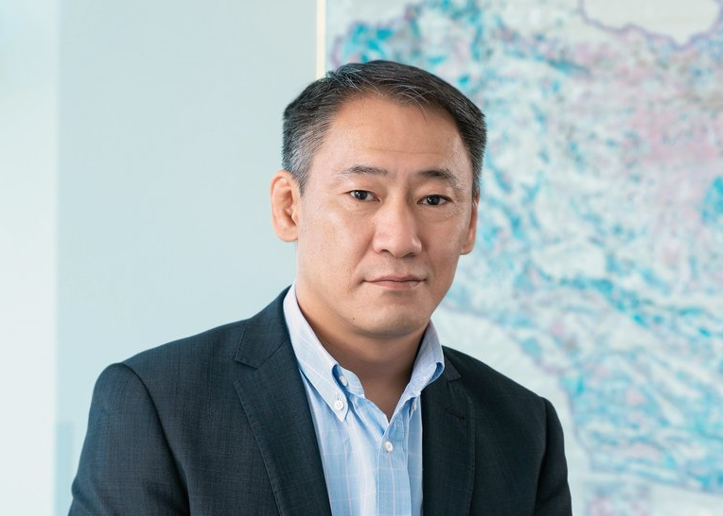 S. MUNKHSUKH, CEO of Oyu Tolgoi LLC
The company has no interest or intention to operate without a Feasibility Study (FS). We agree with the rationale related to the FS as highlighted in the expert’s report. However, some FS-related issues exceed the company’s authority or are beyond its control, making them impossible to implement. The company strives to use the FS as a tool to ensure a common understanding.
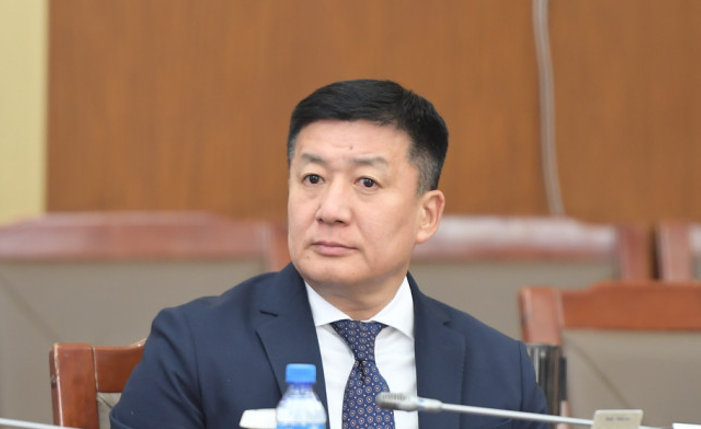 S. BAYARTSOGT, Former Finance Minister of Mongolia
The company “Ontre” was not a participant in the 2009 SPV. According to Mongolian law, an entity must hold an exploitation license with the Mineral Resources and Petroleum Authority (MRPA), invest $50 million in the first five years in Mongolia, and enter into an Investment Agreement itself. We respect the agreement between the two companies and should ensure the investors’ rights to transfer it. Before the Oyu Tolgoi SPV becomes effective, the exploration license should be converted into an exploitation license. There is no issue regarding the SPV holding specific rights or obligations. To gain access to the licensed area of “Ontre,” a company must either become part of the Oyu Tolgoi SPV or enter into a separate, independent agreement. In other words, it clarifies what percentage of “Ontre” would be acquired and which taxes would or would not be stabilized. However, the 2004 agreement between Ivanhoe Mines and “Ontre” stipulated an 80/20 profit split. At that time, “Ontre” only held an exploration license and had not invested in Mongolia; the investment was made on behalf of the company by Ivanhoe Mines. Ontre” had no legal relationship enabling it to become an investor, enter into an SPV with the government, or obtain tax stabilization. The company itself did not assert such rights. Only a few provisions in the SPV were included to provide favorable conditions for Oyu Tolgoi and its SPV, noting that “the Government of Mongolia acknowledges and accepts the agreement between the two parties. Regarding the strategic deposit, the Parliament or the Government must adopt a resolution to acquire 34% of “Ontre.” Since “Ontre” does not have an SPV, it will pay the special mineral royalty (SMR), taxes, and escalating SMR, and will not benefit from the stabilized tax exemptions granted to Oyu Tolgoi.
This creates two legal regimes:
• One where a party holds 34% in the large deposit, has an SPV, and cooperates with Oyu Tolgoi and the Government.
• Another where a party holds 34% without an SPV and is subject to all taxes.
This arrangement is expected to yield favorable results. Whether exchanging “Ontre’s” 34% for a special SMR results in losses due to costs or operates profitably without exemptions will become clear. If the Government collects all taxes from “Ontre” and exchanges the 34% share for the special SMR, it could receive approximately 15% SMR from Oyu Tolgoi. Currently, no difficulties arise since “Ontre” has not yet entered its licensed area. The underground mine development should extend into the “Ontre” area, especially given high copper prices, making active operations essential.
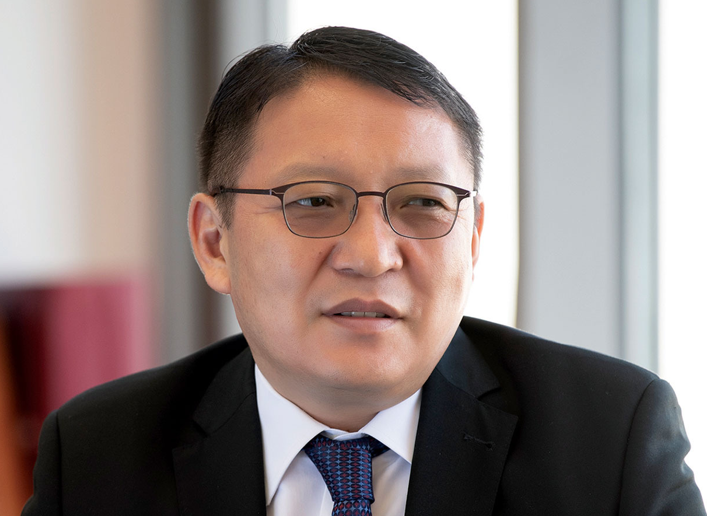 S. NARANTSOGT, CEO of Erdenes Mongol Group
The matter regarding “Ontre” has reportedly been postponed multiple times by the Oyu Tolgoi Board of Directors. We have consistently provided advice and recommendations against discussing this issue, as doing so could reduce Mongolia’s benefits. We also warned that if the Oyu Tolgoi Board were to make decisions unilaterally, it could result in serious legal errors. Preparations to establish a new Special Purpose Vehicle (SPV) have begun. The Feasibility Study (FS) is complete, and the data is well-defined, including the L1 layer of the North Hugo deposit, which covers 2% of the deposit. The FS data consists of over 1,000 variables and includes financial modeling through 2100, presented as a comprehensive guide. Previously, we developed a financial model under the agreement with Orano Mining, which is used in international banking and finance. Leveraging that experience, we developed five models for establishing a new SPV in the area covered by the “Ontre” license. Thus, the Mongolian side is ready to agree in the L1 area. The “Ontre” project could generate $2 billion for the Mongolian government in special royalties. The least favorable option is the current stabilized agreement with Rio Tinto.
Mining Insight Magazine, 2025 №12 (049)