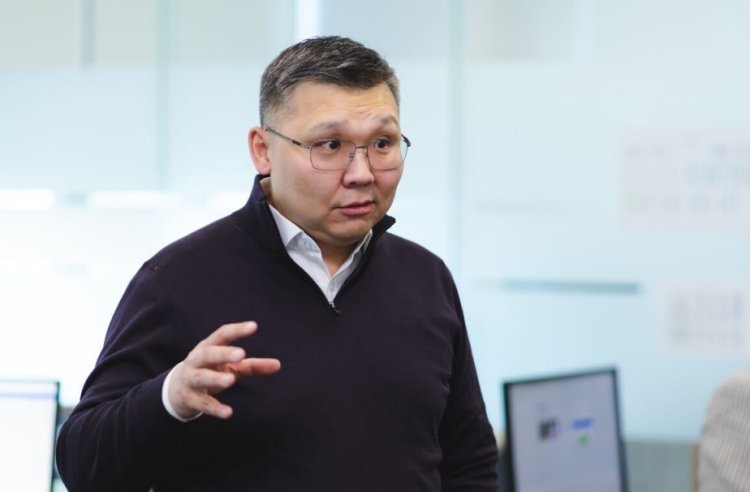



Mining Insight Magazine’s E. Misheel spoke with Aldo Pennini Director of Strategy, Program and Content of the Future Minerals Forum.
In 2026, we are bringing together the global leadership of the mining industry. We already have more than 160 confirmed speakers-around sixty of them are CEOs and chairs of the world’s largest mining companies
What will be the main theme and key focus of the Future Minerals Forum 2026?
Our central theme for FMF 2026 will be “Dawn of a Global Cause: A New Minerals Age for Development.” This speaks to two things. First, the idea of a shared global cause highlights the need for countries to collaborate on mineral development, as this is the only way to meet the supply requirements for areas such as the energy transition. Second, the notion of development is fundamentally about jobs - and the role of the minerals sector and its various segments, whether processing, manufacturing, or other parts of the value chain. The aim is to create as many jobs as possible, particularly in emerging supplier countries. This represents a once-in-a-lifetime, even historic, opportunity to leverage minerals to drive new phases of development in Central Asia, Latin America, Africa, the Gulf, and elsewhere. We are living in an historic moment, and the Future Minerals Forum is the place where these key conversations have been taking place - and will continue to take place going forward.
Who are the prominent guests, important meetings, and key events to watch for at this year’s Forum?
As for some of the key elements of the 2026 event: first, we have a Ministerial Roundtable, which we expect will attract between 90 and 100 governments. This roundtable is the engine room of the Future Minerals Forum. We consider ourselves government-led - as we will touch on in your next question - and this is where action is driven from.
Then we have the main conference, which in 2026 we expect will attract around 20,000 attendees - up from 18,000 this year and from just 3,500 back in 2022 So you can imagine - the Forum is growing rapidly. We will also be talking about the funding of mining itself. Investment in mining is heading in the wrong direction. The issue is not a lack of capital; it is the allocation of that capital into viable projects in de-risked environments.
This raises important questions about the investability of certain countries and the quality of projects available for investment. We’ll also be discussing the emergence of processing hubs and the broader diversification of supply. There will be conversations around new energy sources to power the minerals industries of the future.
We will also address the reputation of the sector, which remains a key issue - and as you know, given your interest in sustainability, obtaining a social license to operate is essential for developing the mines of the future. The industry faces challenges here, and we look forward to discussing them at the Future Minerals Forum and, hopefully, developing plans to address these challenges.
In 2026, we are bringing together the global leadership of the mining industry. We already have more than 160 confirmed speakers - around sixty of them are CEOs and chairs of the world’s largest mining companies. The rest include CEOs and leaders of service providers, NGOs, technology firms, investors, and other stakeholders across the full spectrum.
The way I would describe the Future Minerals Forum is as a large, action-oriented workshop where people come to engage, discuss, do business, and shape the future of the sector
Some of the new programme elements for 2026 include what we call Gateway to Funding, delivered in partnership with the Bank of Montreal. As you may know, BMO is one of the world’s leading financiers of exploration and mining, and this is our first time collaborating with them. We announced this just a few days ago. The session will feature company presentations to prospective investors, applying the BMO conference model at a smaller scale within FMF.
This means we already have a number of companies - including money managers and mid-tier firms - preparing to present their strategies to an audience primarily comprising Saudi family businesses, sovereign wealth funds, and other regional and global investors.
Saudi family businesses and sovereign wealth funds, as well as other global investors but the focus will largely be on the region, tapping into regional capital for international mineral development. So that is a key element.
A second element is what we call State of the Sector, which will focus on a report we are producing for the first time, called the Future Minerals Barometer. This report aims to become a global reference point for tracking mineral value chain development over time.
The report will include industry surveys, data-based dashboards, and project dashboards. It will examine how countries are performing against key enablers of mineral supply. We hope this will become a valuable public resource for government and industry decision-makers. We will unpack the findings of this report at FMF.
We will also have up to 14 leadership roundtables. These are closed-door discussions held under the Chatham House Rule. Their purpose is to bring together government leaders, industry leaders, and experts to address key challenges and develop recommendations.
In addition to that, we will have technology sessions, country showcases, and a significant exhibition. We will host what we call the MinGen - Minerals Generation -sessions, where we bring future leaders and young people interested in the mining industry into the dialogue. We will also have knowledge exchanges, which are more detailed technical presentations.
So it’s a very broad and deep conference programme. The way I would describe the Future Minerals Forum is as a large, action-oriented workshop where people come to engage, discuss, do business, and shape the future of the sector. It brings together leaders, investors, and the full ecosystem that supports this vast industry. It will be a key meeting - a key event - in January.
The number of participants at the 2026 Forum is expected to increase significantly. Achieving this is closely tied to the role of your Strategy, Programme, and Content team. What have been your team’s main priorities and areas of focus during the past period?
And when we look at what we have achieved over the last five years in terms of policy, investment, and collaboration, I want to highlight a few things. One relates to three initiatives that we have been developing.
At the request of our Ministerial Roundtable, these three initiatives focus, first, on the development of an international critical minerals framework, essentially a policy strategy for bringing countries together to collectively address mineral supply challenges. It’s an inclusive approach. As part of that, we are focusing on key enablers including geology, increased exploration, greater infrastructure financing, and enhanced funding for mining innovation and large-scale technology deployment, particularly in emerging and developing countries.
We’re also talking about talent development, to build the workforce required for these new industries. We will be addressing policy, ensuring that regulatory regimes across supplier countries are efficient and effective, and we’ll also be discussing sustainability - the broader issue of responsible supply.
There are three specific points I want to highlight as part of this. First, we are working closely with the World Bank on the issue of infrastructure financing. The FMF has been collaborating with the World Bank to help shape its upcoming mineral strategy, with a strong focus on infrastructure investment.
We are also concentrating on an initial seven corridors - five in Africa and two in South America. These corridors will expand over time, and we expect to bring additional Central Asian corridors into the programme as well. This is all about increasing funding for infrastructure. Ideally, in January, interested countries will begin discussions with the World Bank on entering into infrastructure funding compacts.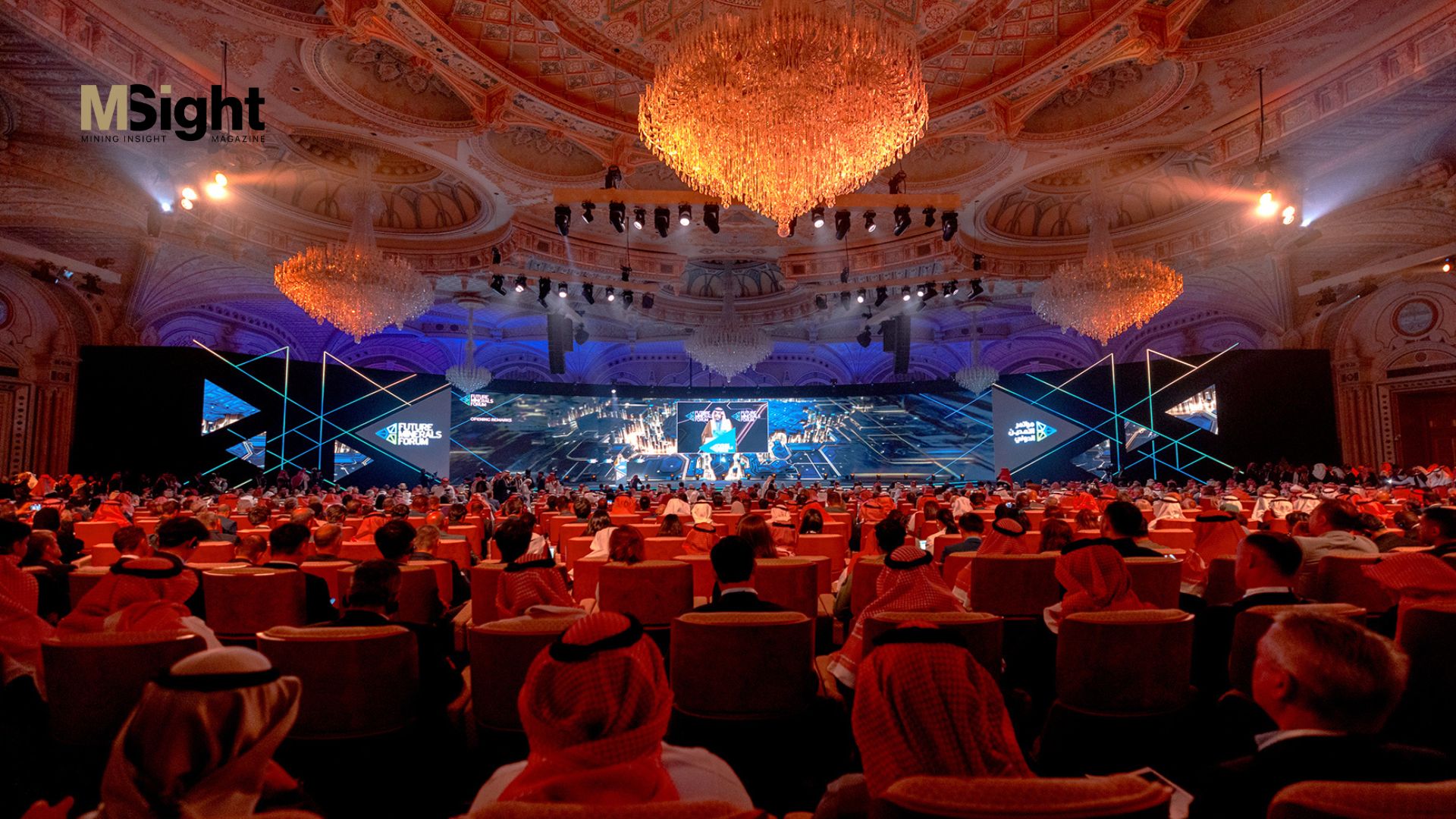
Our ambition is for FMF to become the central platform where this global cause is consolidated
We are also working with the World Bank and the Intergovernmental Forum, and all of this has been driven by FMF over the past few years. Another important priority is policy and institutional capacity-building across what we call the Super Region -Africa, Western Asia, and Central Asia.
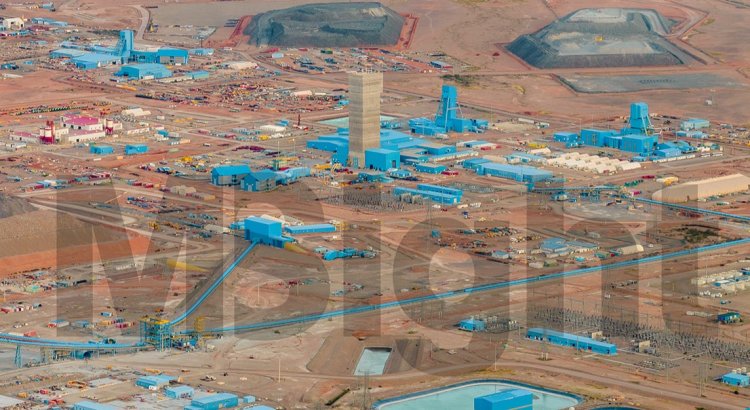
The other vital piece is our collaboration with the International Standards Organization to develop an international standard for tracing copper. This will be a pilot project, a test case for potentially developing traceability standards for other minerals. To help shape that standard, countries such as the Democratic Republic of Congo for copper, and over time Zambia as well, will play a key role. If we look at Central Asia, Kazakhstan and, of course, Mongolia - with one of the largest mining operations in the world in Oyu Tolgoi- will also be central to this effort. This represents tangible policy work already underway, and we have achieved this progress in just a few short years.
On the investment side, in 2022, five agreements were announced at FMF. That number grew significantly, reaching 150 investment agreements and partnerships by 2025, amounting to around USD 20 billion. We expect this number to continue to grow. To date, 42 countries have been involved in developing these initiatives, with more than 130 experts nominated by those countries. As a result, FMF has now become the leading global minerals platform- driving action and delivering impact.
What does the long-term strategic vision for FMF look like?
Our ambition is for FMF to become the central platform where this global cause is consolidated-where countries can come together, even in a challenging geopolitical environment, to collaborate on mineral development and take practical steps to enable more mines, expand value addition, and ensure benefits flow to local communities.
First, we are government- led- and by “government,” we mean governments in the plural. That is why the Ministerial Roundtable is so important: governments set the rules, and other stakeholders work alongside them to make mineral supply possible. This is extremely attractive to industry, as they seek direct engagement with governments- and FMF is the place where that happens.
Second, we are action-focused, as the initiatives I’ve outlined clearly show.
Third, we are inclusive- bringing together governments, industry, NGOs, investors, and multilaterals to solve shared challenges.
And finally, we operate at a leadership level. We bring together ministers, CEOs, and the key decision-makers of the sector.
In terms of geography, our work is centered on what we call the “Super Region”-Africa, Western Asia, and Central Asia-representing roughly 80 countries. How we are looking to deepen that collaboration is through the initiatives I mentioned earlier. When we talk about infrastructure funding and our work with the World Bank, this is ultimately designed to benefit countries across these regions. We will be working with the Copper Belt countries in Africa, and we also intend to work with the major copper and uranium producers of Central Asia on both infrastructure and mine development.
We are working on a dedicated project with the International Standards Organization to develop a copper standard
Fundamentally, the capacity-building work we are undertaking applies to all of these countries—whether it relates to infrastructure, environmental and traceability standards, responsible mining, de-risking frameworks, or talent development to train the workforce of the future. We are doing this, by the way, through the creation of a network of Centres of Excellence.
These Centres of Excellence are already being established-some focusing on policy, others on sustainability. There will be one dedicated to innovation and technology, and another to talent development. These centres will be distributed across the Super Region. For example, Morocco will serve as the hub for sustainability, Riyadh the hub for innovation, and South Africa the hub for talent development. Work is also underway in Central Asia to establish such centres, and we intend to partner with them. So, a web of excellence is forming-a network designed to help supplier countries build their own capabilities, supported by customer countries with established expertise. This is a fundamental part of our vision.We also provide a collective voice for this large region. As you can see from the initiatives I described, supplier countries are transitioning from being rule takers to rule shapers. This is evident, for example, in the development of the international copper traceability standard, where standards organisations from Africa, Latin America, and Central Asia are actively shaping that standard. The same applies to our work with the World Bank. The Bank is re-engaging in the minerals sector after several decades, and its strategy is evolving to be more responsive to the needs and perspectives of supplier countries. Influence and voice are key.
As I mentioned with regard to capacity building, our ambition over the coming years is to create a robust network of collaboration across these three major regions.
In terms of mechanisms to ensure that all of this work continues, the Ministerial Roundtable remains the engine room. It will serve as the primary forum for reporting back on all existing and new initiatives. We are establishing a permanent Ministerial Steering Group to oversee this work. Coordination groups are already in place, and technical working groups are being formed for specific initiatives.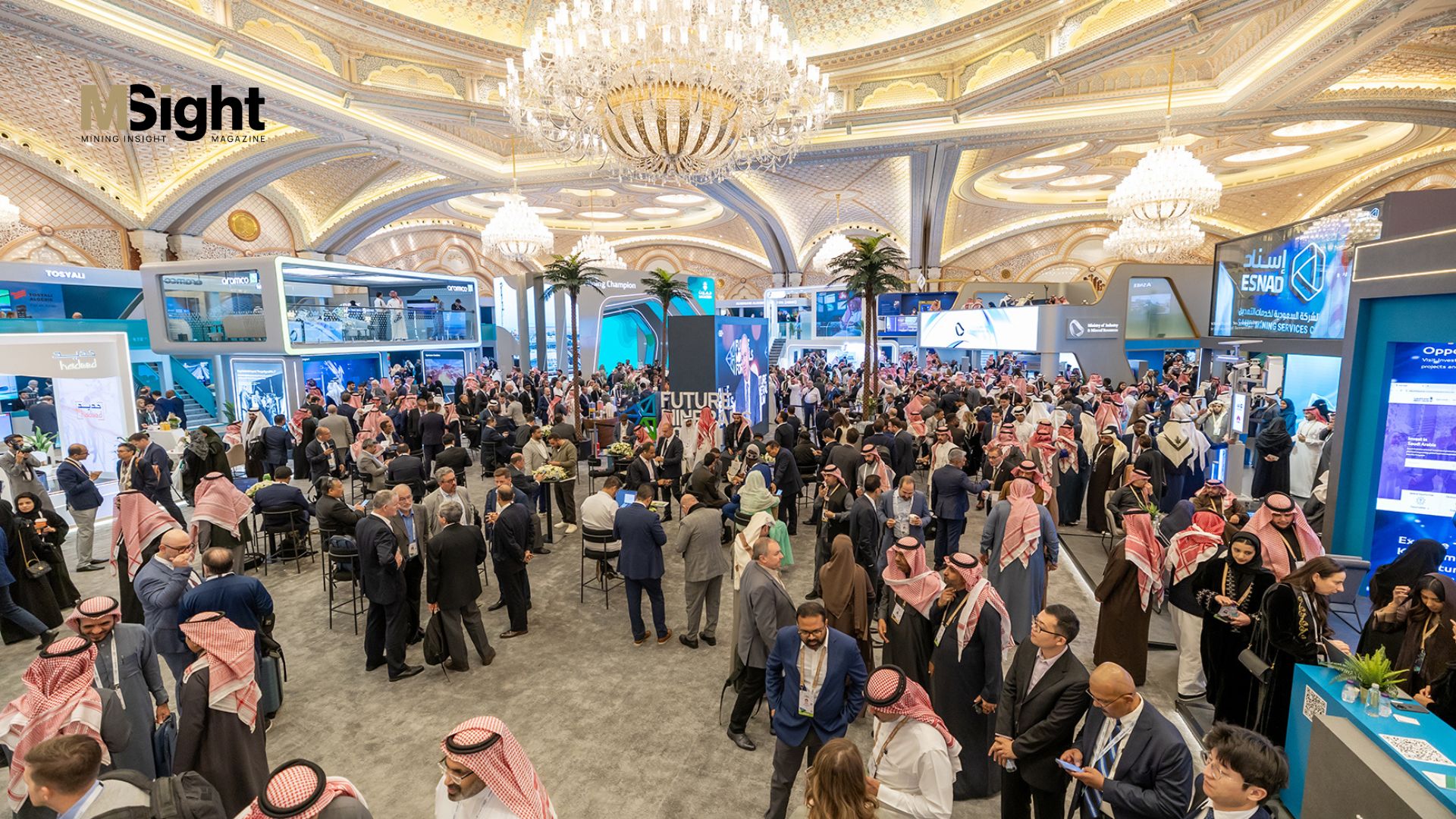
The story of Saudi Arabia is truly remarkable. The country is undergoing one of the world’s most significant economic and social transformations, and the FMF is really a microcosm of that change
For example, for the Centres of Excellence network, we are creating a secretariat at one of the universities here in Riyadh to support development of the regional network. In our partnership with the World Bank, we have established a reporting mechanism through which the Bank briefs FMF each January on its infrastructure work. The International Standards Organization will also report back, as will the Intergovernmental Forum, which will focus on policy.
We integrate sustainability throughout the programme; we don’t treat it as a separate component. Instead of having standalone sessions on sustainability, we consider it an integral part of everything we do. For example, when we discuss capacity building in the Ministerial Roundtable, we address transparency and traceability to ensure that production in supply countries is carried out responsibly.
In the Knowledge Exchange, we have a deeper-dive session specifically focused on sustainability and the key challenges in this area. When we talk about industry reputation, that’s also a core element. Our mainstage leadership discussion looks at what actions the industry can take to strengthen its performance and become more acceptable to local communities, as well as how we can better communicate the work the industry is doing.
To add to that, we are working on a dedicated project with the International Standards Organization to develop a copper standard. I believe this will be one of FMF’s major contributions to responsible supply. This directly influences social licence to operate, as well as investor confidence, creating a more virtuous cycle.
We’ll also be hosting a leadership roundtable on this, together with the OECD, who, as you know, play a significant role in setting guidelines for responsible sourcing. We’re engaging with the leading experts in this field, and given your interest-and the fact that you’re doing a PhD on this topic-you’re very welcome to join those conversations.
Saudi Arabia is globally recognized for its oil production and refining industry. Now, it aims to rapidly develop a new identity as a “critical minerals nation.” In your view, what stage will Saudi Arabia’s new positioning have reached by 2030? What challenges might arise on this path?
The story of Saudi Arabia is truly remarkable. The country is undergoing one of the world’s most significant economic and social transformations, and the FMF is really a microcosm of that change. When you come to FMF, you immediately get a sense of what’s happening across the Kingdom.
Saudi Arabia is working to diversify its economy, with mining positioned as one of the key pillars of its future. If you look at the National Industrial Strategy, it outlines twelve emerging sectors the Kingdom aims to develop, including aerospace, automotive, pharmaceuticals, food processing, and machinery and equipment- all of which depend on minerals. This is in addition to the major national projects underway that require enormous volumes of minerals and metals such as iron ore and aluminium.
We are witnessing a story that is still unfolding. Over time, the contribution of minerals to the national economy is expected to grow significantly. Since 2016, mining’s contribution to GDP- starting from a low base- has increased by about 90%.
We are entering a new era- a new age- for mineral development across South America, Central Asia, Africa, and other supply regions
Given the scale of demand, many minerals will still need to be imported. Saudi Arabia is among the world’s top four importers of metals. Some demand will be met locally, but a substantial portion will come from abroad. That is one reason why the FMF has a global outlook: to help facilitate the development of cross-regional value chains.
Regarding the connection between the oil story and the mineral story- it's a fascinating comparison. Saudi Arabia is a country that built a successful, sophisticated value chain around its hydrocarbon endowment, from extraction to refining to downstream products. The minerals sector is different in terms of extraction, but there are strong similarities in value addition. There are important lessons that can be transferred from one sector to the other.
The oil sector also has vast pools of capital, some of which could potentially support mineral development. There is also an exchange of know-how, geological data, systems, and processes that the minerals sector can learn from. These interactions are now beginning to take shape, which is an exciting development.
As for emerging global supply opportunities- they are enormous. The electrification of the global economy requires unprecedented quantities of minerals. It’s not only the energy transition but also the digital revolution-data centers, advanced technologies, and national security needs- that are driving demand. This brings into focus many minerals that historically received less attention. Beyond the core metals for electrification, there are also specialized minerals-such as rare earth elements-needed for advanced manufacturing.
What’s crucial is the growing regional connectivity, and this is where the FMF truly comes into its own: it is becoming the world’s meeting place for mineral supply. We are entering a new era- a new age- for mineral development across South America, Central Asia, Africa, and other supply regions. Saudi Arabia itself has the potential to become a major hub, given its geographic position, trade links, strong relationships, large pools of capital, high-quality infrastructure, and young, tech-savvy population. It is an ideal location for an emerging hub of supply, trade, and value creation.
That is essentially our story. FMF represents the Kingdom in microcosm, but with a truly global outlook. Its future is very bright.