

 - We will focus on new railway routes and cross-border connections to expand mineral export corridors -
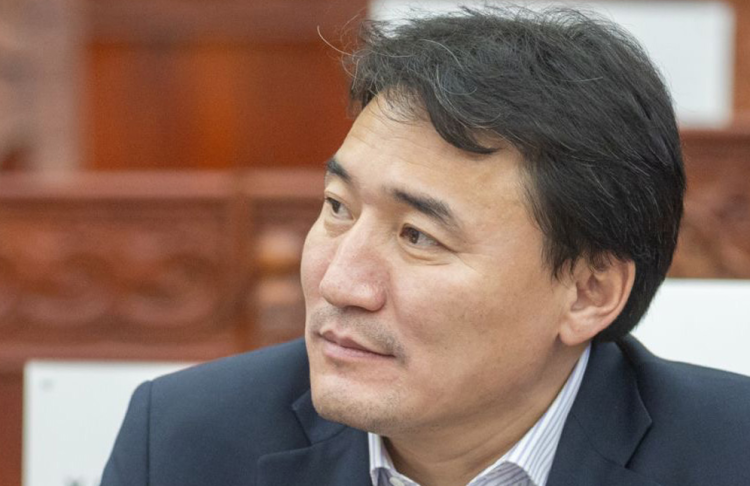
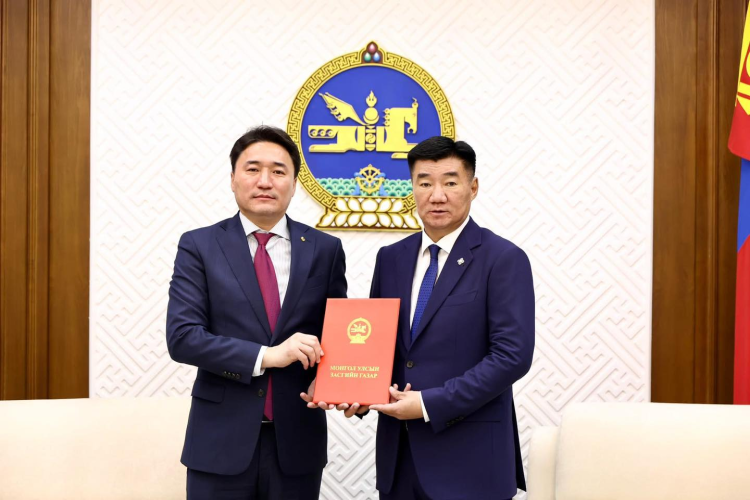
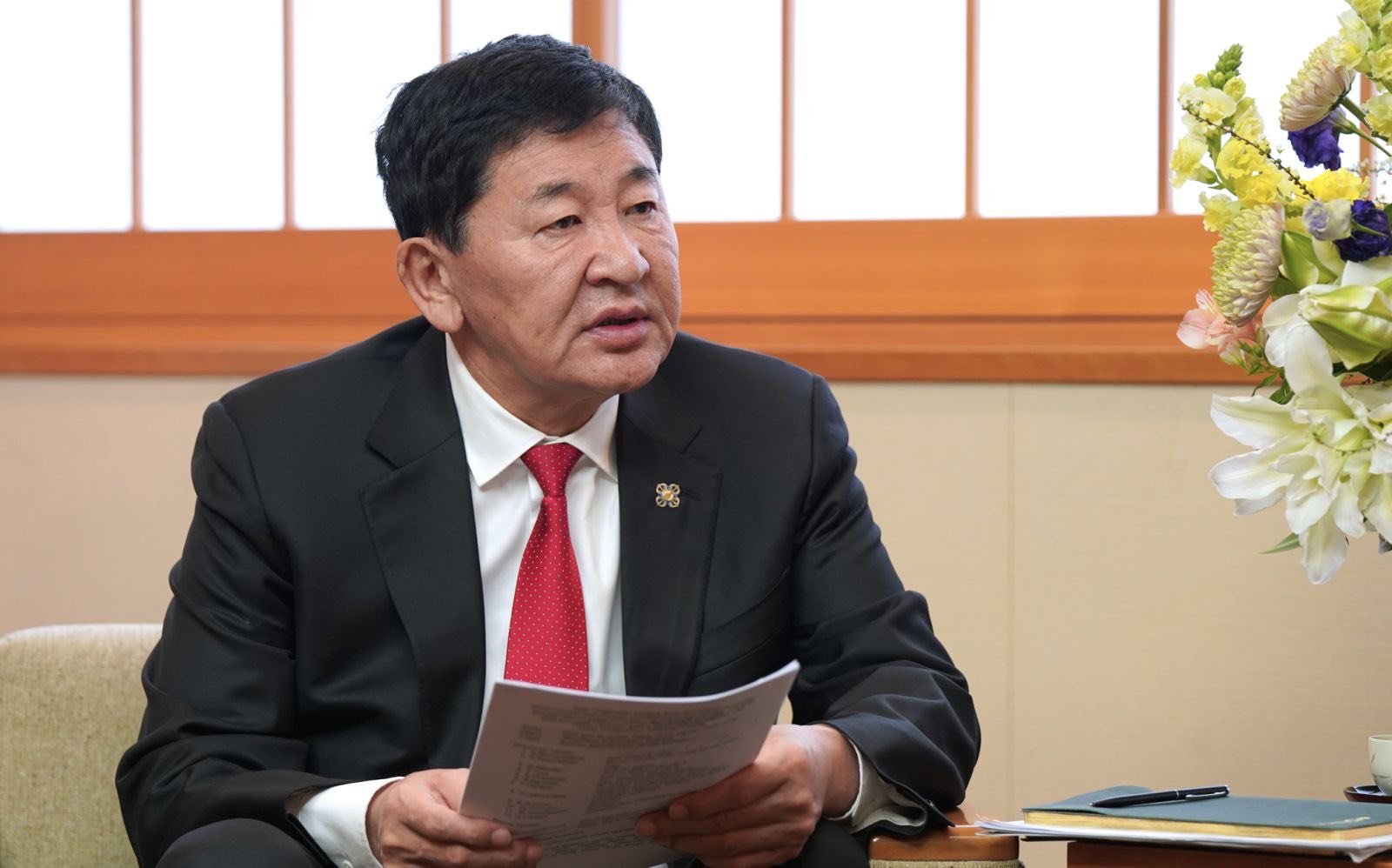
The current state of Mongolia’s transport sector, the progress of railway projects, and cross border connectivity were discussed in an interview conducted by Mining Insight’s E. Odjargal with B. Delgersaikhan, Minister of Roads and Transport.
As Chair of the National Committee to Reduce Traffic Congestion in Ulaanbaatar and as Minister of Roads and Transport, you are directly involved in transport infrastructure. What key issues and priorities are you focusing on?
In essence, the work of the Minister of Roads and Transport is about creating domestic and international connectivity, and it also has a diplomatic dimension. In modern political and economic thinking, connectivity has become a central concept. As strategist Parag Khanna has noted, countries that can connect to multiple markets are the ones that develop. Transport infrastructure networks therefore play a critical role in the economy. Mongolia, which is highly dependent on imports, is incurring significant losses due to inefficient domestic freight transport, slow turnover, weak connectivity, and the absence of a well-developed national network. Improving connectivity across all modes of transport is essential, though this must be done with clear priorities and a focus on strategically and economically viable routes. When I assumed the role of Minister, I committed to focusing on the country’s key strategic projects. First, to improve safety for Ulaanbaatar and its residents, we are advancing the Bagakhangai–Khushig Valley railway project to address the rail line running through the capital. Second, we are prioritizing cross-border railway connections by expanding access to foreign markets. This includes new railway routes and border connections to support mineral exports. These efforts aim to reduce transport costs, strengthen export competitiveness, and increase Mongolia’s participation in international logistics networks.
What policies are China and Russia pursuing in terms of transport infrastructure connectivity, and what kind of discussions are being held with Mongolia?
In reality, Mongolia has only two neighboring countries. By making use of the opportunities offered by these large markets, Mongolia is focusing on developing its western and eastern railway corridors and, in the longer term, opening the shortest route connecting Europe and Asia. This is considered essential for the country’s future development. The programme to establish the Economic Corridor, signed in 2014 by the heads of state of Russia, Mongolia, and China, clearly outlines railway routes along the eastern and western vertical axes. At present, Mongolia’s main source of income is mineral resources. Six types of mining products account for 95 percent of the country’s exports, most of which are bulk cargo. It is estimated that 25 to 30 million tonnes of mineral products and raw materials are exported annually via Ulaanbaatar Railway. However, the Zamyn-Uud border crossing has a capacity of only about 12 million tonnes per year, which limits the transport of both domestic mineral products and transit cargo. Ulaanbaatar Railway, a joint venture owned 50:50 by Mongolia and Russia, has traditionally focused on maintaining the northern route. Meanwhile, the southern sections, particularly beyond Sainshand, have gentle gradients that restrict both passenger and freight transport. The Zuunbayn–Sainshand line was not originally designed for full freight use and can carry loads of only two to three tonnes.
Mongolia has been transitioning to a market economy for more than 30 years. As a result, export-oriented railway lines that connect the country to international markets are critically needed.
For this reason, the Gashuunsukhait–Gantsmod border railway project is being implemented as a priority.
The Gashuunsukhait–Gantsmod border railway project, which will open Mongolia’s second cross-border railway connection after more than 60 years, has been discussed since 2008, yet construction has only recently begun. When is it expected to be completed?
Discussions on connecting the Gashuunsukhait–Gantsmod railway across the border date back to 2010, and it is said that 55 meetings were held with the Chinese side. After I was appointed Minister of Roads and Transport, I participated in the 56th meeting. It is true that negotiations with the Chinese side were complex, particularly regarding missed opportunities. China also consistently raised the issue of cross-border railway connections. Following the agreement reached, construction of the long-delayed Gashuunsukhait–Gantsmod cross-border railway finally began in June 2025. As Mongolia has waited many years to move this project forward, border and customs-related issues have been carefully addressed. In particular, a dedicated zone for incoming workers has been established, and border protection authorities have been instructed to ensure that the work proceeds without disruption. As a result, construction is progressing according to plan. Of the more than 3,000 bridge pillars required, around 1,100 have been completed to date. The target is to reach 70 percent completion by 2026.
How much bulk cargo is currently being transported on the Tavan Tolgoi–Gashuunsukhait railway?
Under a resolution of the Government of Mongolia, the infrastructure and rolling stock of the Tavan Tolgoi Gashuunsukhait railway are being operated under a lease agreement by Mongolian Railways. In accordance with a long term coal transportation agreement signed between Mongolian Railways and China Energy Coking Coal, transportation began on 24 June 2025. To date, over a seven-month period, a total of 4 million tonnes of coal have been transported.
Will the Tavan Tolgoi–Gashuunsukhait railway be extended westward toward Dalanzadgad?
Yes. Design work is currently underway for a 100-kilometer railway line along the Tsogttsetsii–Dalanzadgad route. First, this will connect the capital of Umnugovi Province to the cross border railway. The line will later form part of the planned Zamiin Uud–Zuunbayan–Dalanzadgad–Shiveekhuren railway corridor. By linking the provincial capital to the Tavan Tolgoi–Zuunbayan railway and providing southbound access as well as a route toward Zamiin-Uud, this project will enable not only the transport of mining products but also the movement of goods for local residents and private businesses.
One of the key elements of the intergovernmental agreement on the Gashuunsukhait–Gantsmod cross border railway is the plan to connect the next phase of border crossings, namely Shiveekhuren–Sekhe and Khangi–Mandal, by rail. When is the Shiveekhuren–Sekhe cross-border railway expected to be connected?
That is correct. The agreement stipulates that once construction at Gantsmod begins, negotiations on cross-border rail connections at other border points will also commence. In line with this, at the opening ceremony of the Gashuunsukhait Gantsmod cross-border railway construction, an agreement was reached with the Chinese side to begin the Shiveekhuren–Sekhe railway connection. Discussions are currently ongoing at the working level, and the agreement is expected to be signed this year. There is a possibility that the Shiveekhuren–Sekhe railway could be connected and become operational ahead of the others. Essentially, the connection requires laying approximately 300 meters of railway to link with the Chinese side. Construction on the Mongolian side of this cross-border railway project was fully completed in 2024 and accepted by the state commission.
Will a railway be built from the Shiveekhuren border crossing to the Nariinsukhait group of deposits, and if so, when?
Yes, it will be built. Once the Shiveekhuren–Sekhe cross-border railway connection is completed, a railway line will be extended to the Nariinsukhait group of deposits. The companies currently engaged in coal mining at those deposits will construct this railway themselves, as they have the right to do so.
More broadly, will Mongolia’s western vertical railway corridor be extended as far as Arts Suuri? The “State Policy on Railway Transport” includes the Arts Suuri Nariinsukhait–Shiveekhuren route.
This has not yet been finalized. At present, there is no clearly identified investor for this railway project. The main unresolved issue remains the question of railway gauge.
What is the current operational status of the Tavan Tolgoi–Zuunbayan railway, which forms part of the east–west horizontal axis connecting the western and eastern vertical corridors, including the Shiveekhuren Dalanzadgad–Tavan Tolgoi–Zuunbayan route? Is freight transportation increasing?
At present, six coal trains per day are operating on this railway, transporting coal to the Khangi border crossing. From this year onward, coal exports from the Umnugovi side, particularly from Tavan Tolgoi, will increase. From the Dornogovi side, transportation of lignite coal for export will also increase significantly.
At what stage is the cross-border railway connection project at the Khangi–Mandal border crossing?
A working group has been established to ensure unified management and coordination of negotiations with the Chinese side and to develop technical solutions for the construction of the Khangi–Mandal cross-border railway. Discussions with the Chinese side are ongoing. It is necessary to include this railway project in China’s 15th Five-Year Plan, to amend the 2004 intergovernmental agreement between Mongolia and China on border crossings and their regimes, and to formally approve the border connection point. Construction work will begin after these steps are completed.
What expansion and modernization works are being carried out at the Khangi border crossing? What export capacity is being achieved? What are the prospects for increasing Mongolia’s mining exports through this crossing, and how strong is demand from the Chinese side?
At the Khangi border crossing, terminals for bulk cargo, hazardous cargo, and fuel are being constructed. All construction work at the border crossing is expected to be completed this year. Demand for coking coal, which is Mongolia’s main export revenue source, is strong among end users in the Baotou industrial region, one of China’s leading steel-producing centers and the world’s second-largest industrial hub. Baotou is the most important, largest, and closest market for Mongolia’s coking coal. This reflects Mongolia’s geopolitical reality.
Erdenes Tavan Tolgoi has announced plans to increase coal exports through the Khangi border crossing. Freight volumes on the Zuunbayan–Khangi railway are expected to grow. Will the capacity of this railway be expanded?
At present, there are orders totaling 10 million tonnes from the Zuunbayan side. Looking ahead, as conditions improve for delivering coal to Chinese end users via a shorter route, freight demand on this railway is expected to increase, and the railway’s capacity will therefore be expanded.
What is the status of the Bichigt–Zuunkhatavch cross border railway project?
The issue of railway gauge at Bichigt has not yet been resolved. Because the gauge issue remains unsettled, investment decisions have also been delayed. There are estimates that more than 400 kilometers of railway would need to be constructed along the eastern vertical corridor to reach the Bichigt border crossing. The feasibility study for the Bichigt–Zuunkhatavch cross-border railway project is currently being prepared by Mongolian Railways. After that, a selection process will be conducted. The project is planned to be implemented as a public–private partnership. Mongolia’s eastern corridor railway would pass through China’s Zuunkhatavch border crossing and continue through Liaoning Province to the Jinzhou seaport. This is expected to help reduce congestion and pressure at Tianjin Port, which currently handles much of Mongolia’s foreign trade cargo. Mongolia also sees potential for cooperation with Russia on the Solovyovsk Ereentsav–Bichigt railway route, although Russia is currently facing limited financial resources. The Ereentsav railway line is operated by the Ulaanbaatar Railway joint venture. Overall, in parallel with the construction of the Bichigt border railway, domestic infrastructure will need to be upgraded and improved.
What is the current progress of the Bagakhangai Khushig Valley railway project, which branches off from the 1,100-kilometer railway network operated by Ulaanbaatar Railway?
Although a decision was made three years ago to implement the Bogd Khan Railway project, no construction work had begun until it was restarted. Agreements were reached through negotiations with Russian Railways. Construction of this railway officially commenced on 25 April 2025, with plans to put it into operation in 2027. This is a project of strategic importance for national development. Once this branch railway becomes operational, it will be possible to transport 34 types of hazardous cargo, including fuel, chemicals, and explosive materials, along a new route south of Bogd Khan Mountain without passing through the city center, significantly improving safety for residents of the capital. In addition to traffic congestion, hazardous cargo should not pass through the city. At present, 424 trains carrying explosive materials are stopped in Ulaanbaatar. Due to a lack of storage facilities and other constraints, these cargos are not unloaded and remain stationary for extended periods. This issue has been repeatedly raised with relevant authorities, including the Cabinet Secretariat, the State Emergency Commission, and the General Intelligence Agency. Despite budget constraints, work has continued. With the efforts of 62 domestic companies, 82 kilometers of basic infrastructure have been completed, and the upper structure has reached 10 percent completion. Mongolian Railways has been financing part of the project through its own efforts. In general, management at Mongolian Railways and Ulaanbaatar Railway is required to operate with the efficiency of private companies. We must reduce excessive structures and unnecessary burdens in order to operate profitably. Once this branch railway enters operation, it will be capable of transporting 3.5 million tonnes of cargo in the first year, increasing to up to 20 million tonnes annually over time. As a result, between 316 and 1,800 heavy trucks per day will no longer need to operate on the capital’s roads. This is expected to reduce traffic congestion in Ulaanbaatar by 20 to 30 percent and lower noise and air pollution.
What road infrastructure projects are currently being implemented?
For the first time in Mongolia, a heavy-duty, special-purpose road will be constructed through a public–private partnership. This will serve as a model for the country and mark the beginning of a gradual transition toward toll roads in line with international practice. In recent years, vehicles transporting mining products and fuel operated by individuals, businesses, and organizations have frequently exceeded weight limits. Vehicles with an actual weight exceeding 44 tonnes while traveling on public roads are required to use non-public, special-purpose roads. Last year, construction began on the first phase of a 152-kilometer paved road along the Baruun-Urt–Bichigt route, connecting Baruun-Urt, the center of Sukhbaatar Province, with the Bichigt border crossing. The project is planned for implementation between 2025 and 2027 with state budget funding totaling MNT 324 billion, of which MNT 31.6 billion has been allocated in the 2025 state budget. Once the paved Baruun-Urt–Bichigt road is completed, a new Asia–Europe road network passing through Mongolia will be added, and the Bichigt border crossing is expected to develop into a major gateway after Zamiin-Uud. This will create opportunities for trade with Northeast Asian countries via Chinese ports such as Tianjin, Jinzhou, and Dalian, giving the project significant economic importance.
What are the main priorities in the aviation sector for 2026?
This year, the focus is on passing the international audit (USOAP CMA), launching flights to the United States, and increasing the number of international flights transiting through Mongolia’s airspace. Under Mongolia’s 2026 State Budget Law, the amount of air navigation service charges transferred to the state budget will be reduced, with MNT 40 billion allocated for upgrading technical equipment to ensure flight safety. In addition, efforts will be made to upgrade Gurvansaikhan Airport in Umnugovi Province, Murun Airport in Khuvsgul Province, and the airport in Bayan-Ulgii Province to international airport status.
Is the new international airport reaching capacity?
It is true that passenger numbers have increased and the airport is becoming crowded, but this is a positive challenge. In my capacity as Minister of Roads and Transport, I paid an official visit to Japan this month and met with Japan’s Vice Minister for Foreign Affairs as well as the Vice Ministers of Land, Infrastructure, Transport and Tourism. These were decision-making meetings. In line with agreements previously reached at the government level between the two countries, the airport will be expanded using Japan’s loan facility of up to USD 1 billion. The currently operating Chinggis Khaan International Airport was originally designed to serve 1.6 million passengers, with a total area of 37,000 square meters. As of 2025, it is handling 2.4 million passengers. With increases in both international and domestic flights, passenger numbers are expected to continue growing. Demand for international flights is particularly strong. Therefore, the airport will be expanded to a total area of 86,000 square meters, which will add 11 additional boarding and disembarkation gates. The expansion work is scheduled to begin in 2027.
What challenges is Mongolia’s transport sector currently facing?
The development of Mongolia’s railway sector is influenced by many external and internal factors. At a time when global economic and geopolitical conditions are changing by the minute, it is essential for us to act quickly and decisively in developing the railway sector. Within the framework of Mongolia’s foreign policy concept, we strive to cooperate on railway sector development on an equal footing with all countries around the world. In particular, we are working to expand cooperation with our neighboring countries, Russia and China. Cooperation with neighboring countries must be based on aligned interests. From a domestic perspective, however, it is very difficult to secure political decisions for the railway sector. Railways are mega projects that are directly linked to the country’s economy and development, involving decisions at the level of Parliament and the Government, as well as complex investment issues. There are many challenges in this regard. Nevertheless, compared to the past, an important shift has taken place in Mongolia’s mindset. There is now a growing recognition that Mongolia is capable of building railways using its own internal resources and capacities.
Thank you for the interview.
Mining Insight Magazine, January 2026