

 O.BATBOLD
VISITING MAADEN’S MANSOURAH MASSARAH GOLD MINE
Riyadh – Taif – Mansourah Massarah. 10-11 January 2026
At 07:30 in the morning, two helicopters lifted off from Taif Airport, heading northeast toward the central regions of Saudi Arabia. Within minutes, the city disappeared beneath us. In its place emerged an immense and ancient geological landscape stretching across the western part of the Arabian Peninsula. From the air, the terrain told a deeper story, one of mineral wealth shaped over hundreds of millions of years. Saudi Arabia has intensified exploration activities along its western belt, particularly near the Red Sea coast, where new deposits of gold, copper, zinc, nickel, and phosphate continue to be identified. This mineral-bearing zone, known as the Arabian Shield, has long carried the Kingdom’s geological heritage. Today, it stands at the center of Saudi Arabia’s economic transformation. This was not an ordinary flight to a mine. It was a journey into the emerging core of Saudi Arabia’s mining future. 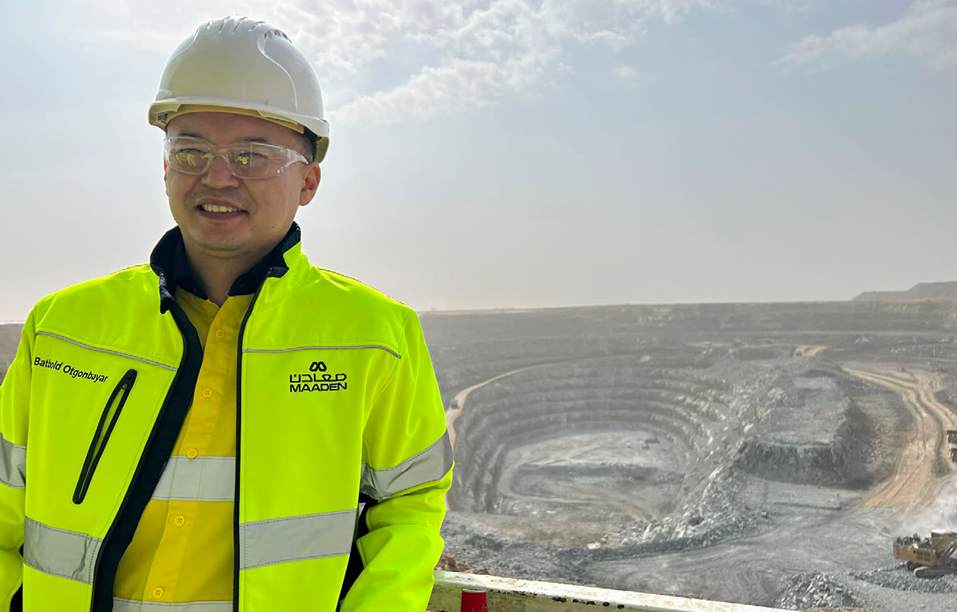 On board were just five mining journalists representing four continents: Mining Magazine from the United Kingdom, Mining. com.au from Australia, Mining Weekly from South Africa, Bloomberg Saudi Arabia, and myself representing Mongolia’s Mining Insight and Energy Insight. Selected as official media partners of the Future Minerals Forum, we were invited by Maaden to visit one of the Kingdom’s most strategically important gold operations, a site rarely opened to international media. For Maaden, this was far from a routine press tour. It was a deliberate and carefully planned strategic decision to open one of its flagship projects to professional scrutiny and allow the global mining community to see firsthand how Saudi Arabia is building its mining sector.
MAADEN AND SAUDI ARABIA’S MINING TRANSFORMATION
Saudi Arabia’s Vision 2030 aims to diversify the national economy and reduce dependence on hydrocarbons. Within this framework, mining has been identified as the country’s third major economic pillar. At the center of this transformation stands Maaden, the Saudi Arabian Mining Company. The company leads the development of the Kingdom’s most significant mineral projects and plays a defining role in shaping the future direction of the sector. Through the extraction, processing, and export of gold, copper, phosphate, and rare metals, Maaden directly contributes to economic diversification. Equally important is how Maaden operates. The company has introduced advanced mining and processing technologies, formed strategic partnerships with international mining firms, and aligned its operations with global industry standards. As a result, Maaden has strengthened its competitive position in international markets. Gold, in particular, holds strategic importance in Saudi Arabia’s mining strategy. It is a stable source of export revenue and foreign currency, and a key instrument in achieving Vision 2030 objectives. Beyond economics, gold mining serves as a platform for introducing advanced beneficiation and processing technologies, showcasing the Kingdom’s mining capabilities to the world and attracting international investment and partnerships. Within this context, the Mansourah Massarah gold mine stands out.
MANSOURAH MASSARAH: A NEW BENCHMARK FOR SAUDI MINING
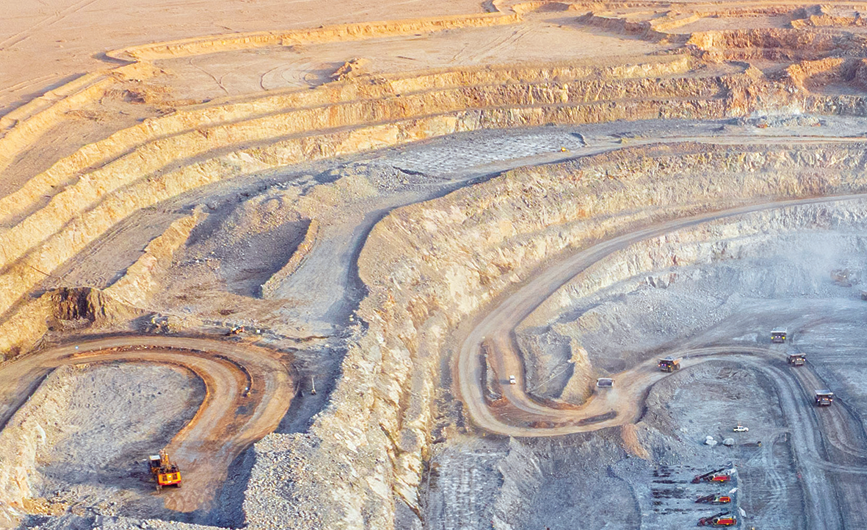
Mansourah Massarah is not only Maaden’s largest and most modern gold mine. It is a tangible demonstration of how Saudi Arabia’s mining sector has entered a new phase. The operation integrates large-scale open-pit mining, advanced processing and smelting infrastructure, strict safety standards, and a long term exploration strategy aimed at continuously expanding the resource base. This integrated approach positions Mansourah Massarah not merely as a revenue generating asset, but as a strategic project underpinning economic diversification, technological advancement, and international competitiveness. The mine also plays a critical role in local development by supporting employment and contributing to infrastructure growth in surrounding regions. Before traveling to the site, reviewing background information made one thing clear. Inviting leading international mining media to Mansourah Massarah was no coincidence. It was a statement. The flight from Taif to Mansourah Massarah took just over an hour, yet offered a rare perspective. From above, the Arabian Shield unfolded as a vast and sparsely populated expanse, reinforcing why Saudi Arabia is increasingly viewed as one of the world’s least explored yet most resource-rich mineral regions. Traveling with the journalists were senior Maaden executives, including H.E. Eng. Khalid Al Mudaifer, Vice Chairman, and Dr. Darryl Clark, Executive Vice President for Exploration and Resource Development and Acting Executive Vice President for Base Metals and New Minerals. Representatives from the Saudi Ministry of Industry and Mineral Resources and the Future Minerals Forum media team also joined the flight. The presence of top leadership sent a clear signal. Maaden treats engagement with international media as a strategic priority. Throughout the visit, executives were open, accessible, and willing to answer even the most detailed technical questions.
THE MOMENT ORE BECOMES GOLD
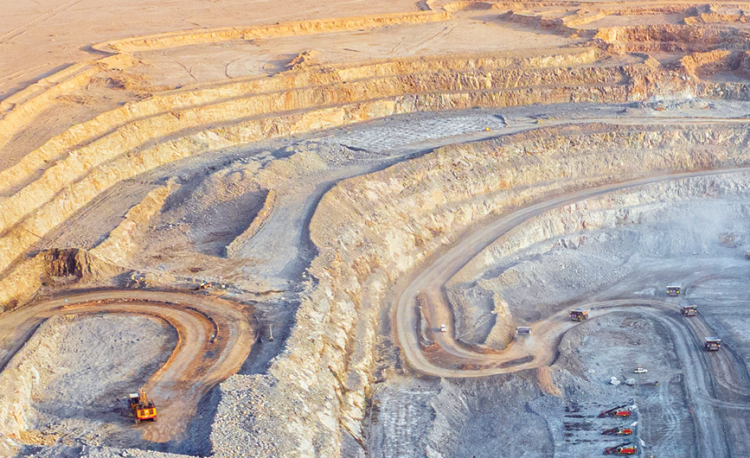
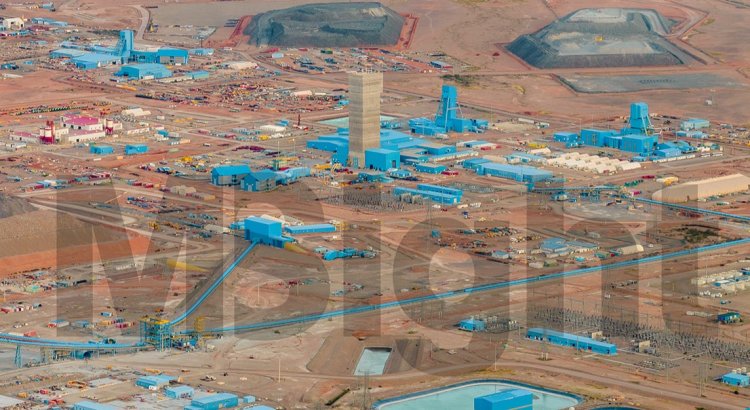
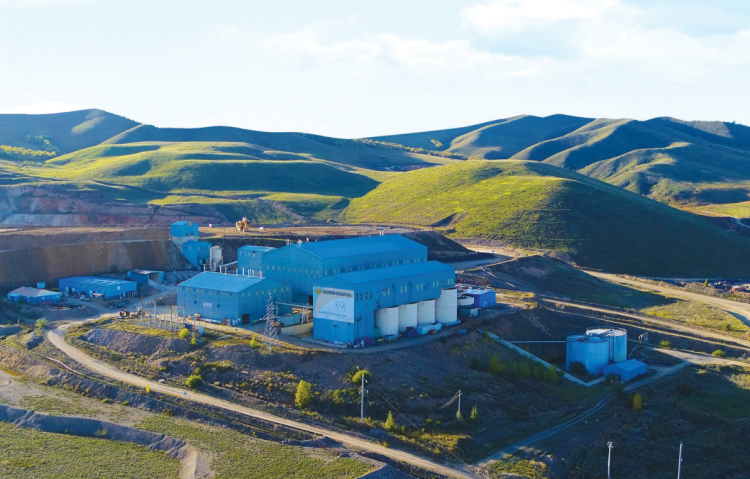
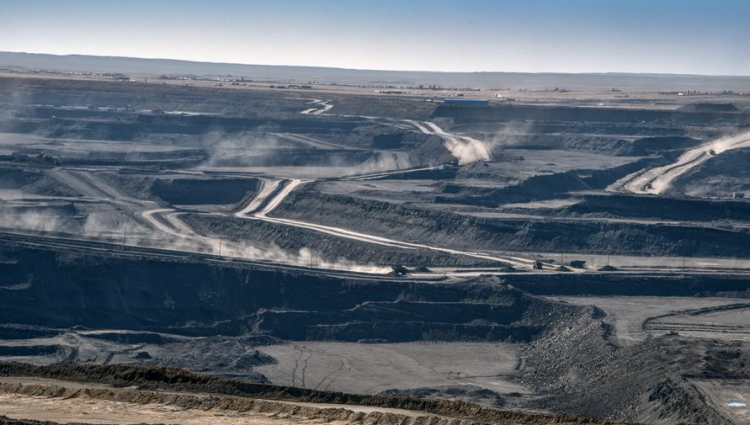
The helicopters landed at the mine’s helipad roughly ten minutes apart. Senior staff from various departments welcomed the group with precise coordination. Journalists were divided into small groups and transported to prepared rest areas marked with name signage. Each of us received personalized protective clothing and equipment. These small details reflected the level of preparation and respect invested in hosting such a limited group. Before entering operational areas, a comprehensive safety induction was conducted. Safety, it became clear, is not treated as a procedural requirement at Maaden, but as a core organizational value. The route of the site visit and key points of attention were then explained in detail, and Dr. Darryl Clark introduced the team responsible for the tour. Interestingly, Dr. Clark had previously worked in Mongolia, and surprised me by greeting me in Mongolian with “zugeer uu (alright).” The tour began at the central operations control room. Large screens displayed real-time data streams, charts, and operational metrics supported by digital platforms such as Hexagon. The control center offered a live snapshot of the mine’s heartbeat, with every process monitored, measured, and managed in real time. From there, we moved to the open-pit mine. The scale of the operation, the layout of haul roads, and the precision of equipment movement reflected disciplined planning and operational rigor. Although dozens of machines performed different tasks, they moved in harmony, giving the impression of a single, living system. The next stop was the blasting area. Engineers explained how meticulous sequencing, timing, and safety protocols govern blasting operations. According to the team, controlled blasting is fundamental to both safety and productivity across the entire mine. At every step, the emphasis on engineering precision and risk management was unmistakable. The highlight came with the visit to the primary gold processing and smelting facilities. The glow of high-temperature furnaces, the metallic structures, and the controlled industrial environment left a strong impression. Even for journalists who had visited mines across Africa, Australia, Asia, and the Americas, this section stood out. Here, ore completes its transformation into gold. Engineers walked us through each stage in detail, explaining processes openly and without hesitation. Filters, furnaces, conveyors, and packaging systems formed a seamless chain. Such transparency and depth of engagement are rare in media visits and deeply telling.
WORKFORCE, KNOWLEDGE, AND LOCAL DEVELOPMENT
One defining feature of Mansourah Massarah is its internationally experienced management team. Senior operational roles are held by professionals with global expertise in gold and base metals mining. The message is clear. Competence matters. Equally notable are the living and working conditions for employees. The mine offers comfortable accommodation, recreational facilities including swimming pools, and a wide range of training and skills development programs. These initiatives support long-term professional growth and reflect a strong commitment to workforce welfare. Maaden’s human resource strategy emphasizes sustained local employment, complemented by community development programs. Employment, skills, and regional development begin at the mine and extend far beyond it. The visit took place just two days before Maaden announced a significant increase in its gold resources. Mansourah Massarah now hosts total mineral resources of 116 million tonnes at an average grade of 2.8 grams per tonne, containing 10.4 million ounces of gold. Across four core areas, Ma’aden added 7.8 million ounces of new gold resources, with Mansourah Massarah contributing a net annual increase of 3.0 million ounces. These figures underline the mine’s long-term potential and its suitability for continued open-pit operations, with future underground development also under consideration. Drilling results confirm that mineralization remains open, with extensive exploration planned through 2026. Power for the operation is supplied by a dedicated 58-megawatt hybrid power plant, with solar PV integrated into the system and prioritised when conditions allow, although Ma’aden has not publicly disclosed the exact share of renewable energy within the mine’s overall power mix. Like all large-scale mining operations in arid regions, Mansourah Massarah faces structural challenges, particularly in relation to water management, energy efficiency, and cost control. Yet its current development trajectory reflects a high level of technical discipline and strategic maturity.
MINING AND THE NATION’S FUTURE
The Mansourah Massarah visit was not an ordinary mine tour. What made it exceptional was not only what was shown, but to whom and how it was shown. By dedicating a full day of senior management time and granting unrestricted access to five journalists, Maaden demonstrated confidence and intent. This was a statement about Saudi Arabia’s mining future and Ma’aden’s readiness to engage the global mining community on equal terms. In terms of scale, operational execution, and governance, the mine increasingly stands alongside major gold operations in Australia and Africa underscoring Saudi Arabia’s emergence as a serious global mining player. Mansourah Massarah stands as tangible proof of Ma’aden’s capabilities. Traditional perceptions of mining give way here to digital control, disciplined planning, and sustainable operations. More than showing how gold is produced, Ma’aden demonstrates how mining is being woven into the nation’s long-term future. As we flew back to Taif at 14:00, it was clear that this half-day visit had delivered insights no report or presentation could fully capture. As a Mongolian proverb says, “Seeing once is better than hearing a thousand times.” Experiencing Mansourah Massarah firsthand gave that saying real meaning. Thanks to the partnership built through the Future Minerals Forum, where Mining Insight became an official media partner, this opportunity to witness Saudi Arabia’s mining transformation on the ground became possible. It was a journey well worth taking.
Mining Insight Magazine, January 2026 №01 (050)