

 E.MISHEEL
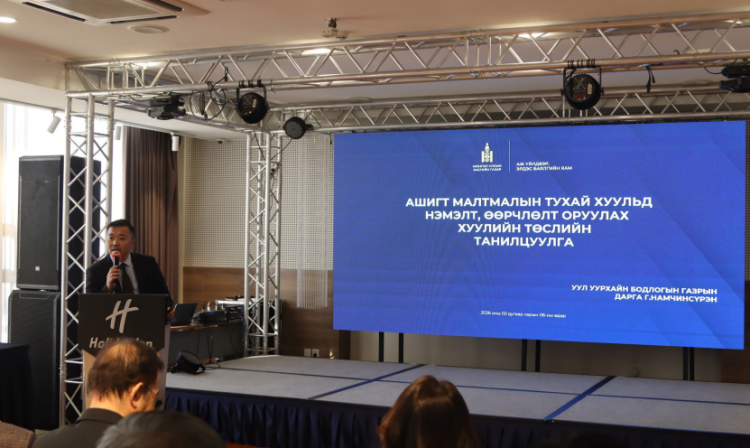
The amendment to the Minerals Law has been reduced from a major reform in the form of a revised version since the formation of the new Government to smaller “additions and amendments”. However, fundamental changes that are not minor are planned to be introduced. These include allowing provinces affected by mining activities to receive a greater share of the Mineral Resource Royalty (MRR), requiring artisanal miners to pay MRR, and introducing processing licenses, which the drafters believe will help establish responsible mining practices. As a result, they expect local communities to develop a more supportive and cooperative attitude toward mining activities. In addition, critical minerals, which have become a focus of global attention, are addressed as a separate topic and included in the proposed regulations. In this context, the amendments to the Minerals Law that have been continuously discussed since 2019 are now being expedited for submission to Parliament on March 15. Below is an overview of what is included in the proposed amendments to the Minerals Law.
HOW MANY TIMES HAS THE MINERALS LAW BEEN AMENDED?
Since 2019, discussions have intensified on making broad amendments to the Minerals Law. Since then, the draft law has been prepared three times in the form of revised versions and amendments. In 2021, a revised version of the law was drafted, but it did not lead to a final outcome. That draft was developed with a similarly broad scope as the original Mining Law draft that had been submitted to Parliament in 2017. This time, compared with previous drafts, the proposed changes are somewhat lighter but focus on improving the foundations for production and development in the mining sector. The Minerals Law was first adopted in 1997 and was revised on July 8, 2006, with 11 chapters and 66 articles. The current law in force contains more than 620 provisions, and since the 2006 revision more than 400 articles and clauses have been amended. In other words, since 2006 the Minerals Law has undergone changes approaching the level of a full revision. Specifically, amendments were made as follows: 61 in 2009, 15 in 2010, 8 in 2011, 28 in 2012, 6 in 2013, 79 in 2014, 26 in 2015, 16 in 2016, 26 in 2017, 3 in 2018, 30 in 2019, 2 in 2021, and 10 articles, sections, and provisions in 2022. During the implementation of the 2006 revised version of the Minerals Law, the law’s 11 chapters and 59 articles were affected in various ways through 16 rounds of amendments. Therefore, the current draft amendments plan to introduce changes to 209 articles, clauses, and provisions. This falls within the scope of amendments as defined by the Law on Legislation.
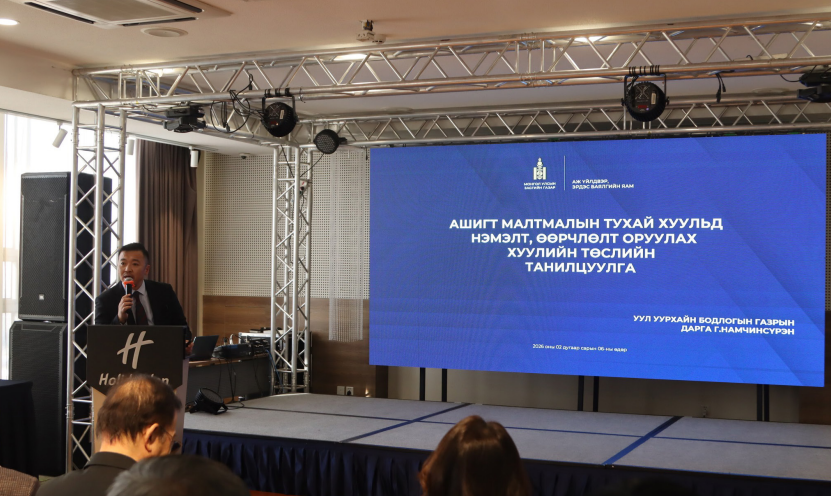
The proposed amendments to the Minerals Law include the following: Addition: Chapter 1, Articles 9, Sections 46, Clauses 75 Amendment: Articles 3, Sections 15, Clauses 9 Deletion: Article 1, Sections 5, Clauses 6 Invalidation: Sections 7, Clauses 6 will be repealed. The draft amendments have been posted on relevant government websites to gather comments before being submitted to Parliament. Mining activities can be conducted on approximately 25 percent of Mongolia’s territory, while the remaining areas are restricted under relevant laws or by decisions of authorized institutions. Last year, the mining sector accounted for 22 percent of GDP, 78 percent of industrial output, 93 percent of export revenues, 74 percent of foreign direct investment, and 27 percent of the state budget. The main regulatory framework for the mining sector is governed by the Minerals Law. Following discussions held in Ulaanbaatar, the Ministry of Industry and Mineral Resources, the Mineral Resources and Petroleum Authority (MRPA), the National Geological Service, and the Mongolian National Mining Association organized consultations in all 21 provinces. Eight working groups were formed, and discussions on the draft law were conducted over three days. The reason for this is that when revenues from the mining sector increase, state budget revenues tend to grow as well. Although mineral export volumes increased last year compared with 2024, coal exports in 2025 reached 90 million tonnes, copper concentrate 2.2 million tonnes, iron ore and concentrate 8.8 million tonnes, zinc concentrate 149 thousand tonnes, and fluorspar 1.8 million tonnes, exceeding planned targets. However, the more than 40 percent drop in coal prices dealt a major blow to the country’s budget and economy. It had been expected that higher copper output and prices would compensate for this decline. Nevertheless, the 2025 state budget had to be reduced by 2.2 trillion MNT. For this year, the budget is being maintained at the level of the previous year. This is partly because copper concentrate exports, which generated significant revenue last year, are expected to decrease by 300 thousand tonnes to 1.9 million tonnes. At the same time, coal exports are projected at 90 million tonnes, iron at 9.4 million tonnes, and zinc at 150 thousand tonnes, all higher than the previous year’s plan. In addition, critical minerals have been included in the draft amendments as a third pillar of economic development, aimed at supporting Mongolia’s economy more sustainably in the future.
WHAT ARE THE FOUR MAIN AMENDMENTS IN THE DRAFT LAW?
The amendments to the Minerals Law focus on four main areas: granting exploration licenses through an application process, establishing a legal framework for critical minerals, introducing licenses for mineral processing plants, and increasing the share of mineral royalty revenues allocated to local communities.
First: Exploration licenses will be granted through both application and competitive selection.
In Mongolia, exploration licenses were issued at their highest levels in the early 2000s, reaching more than 2,000 per year. However, between 2011 and 2013 no exploration licenses were issued at all. Since 2019, licenses have been granted through a competitive selection process. According to the relevant ministry, this approach has not yet achieved the intended results of bringing more projects into economic circulation. Over the past seven years, fewer than 100 exploration licenses have been issued annually on average, totaling just over 660. Since 1997, Mongolia has issued 16,881 mining licenses in total, of which 2,558 are mining licenses and 14,323 are exploration licenses. Of the exploration licenses issued, 13,499 were granted through applications, 738 through competitive selection, 51 under Government Resolution No. 216, and 35 under other government resolutions. Under the draft law to be submitted, competitive selection will be used when geological surveys funded by the state budget identify areas with promising mineral potential. At the same time, there are areas where surveys have been conducted but no promising prospects have been identified. These areas would be granted through an application process. If an area identified as promising is offered through competitive selection but receives no participants or interest, or if the tender fails after being announced several times, it may then be granted through an application process. However, this transition between mechanisms will be regulated through procedures approved by the Government. In general, there have been repeated attempts to reintroduce the provision allowing exploration licenses to be granted through applications, but these efforts have not yet been successful.
Second: A critical minerals list will be established.
Countries with abundant reserves, as well as those with advanced technology, are creating lists of such minerals and defining their legal and regulatory frameworks in their own way. In order to join the global critical minerals supply chain, Mongolia also needs to establish similar requirements. More than 20 countries have approached the Ministry of Foreign Affairs to cooperate on research and implement projects in the field of critical minerals. Although Mongolia does not yet have an official list, the need to define a policy has emerged from an economic perspective. Therefore, the draft law introduces policy provisions for critical minerals under the term “important minerals,” including the approval of a list, the form of support to be provided in this area, and ways to accelerate exploration and research. Under the principle set out in the so-called “long-named law,” critical minerals will not be classified as strategic deposits, and this principle is reflected in the related legislation. The concept of critical minerals was first introduced by the United States in 1939 in connection with defense and military-industrial raw materials and strategic stockpiling. From 1984 onward, Japan, the European Union, the United Kingdom, and the United States began to prioritize critical minerals in relation to high technology, renewable energy, and defense. More recently, from 2015 to 2025, countries have started to legislate and give priority importance to critical minerals in order to address the medium-term risk of shortages of mineral raw materials related to global climate change, advanced technology, the energy transition, and defense. According to the International Energy Agency, as of last year, 35 countries had adopted policies, regulations, or laws on critical minerals. The lists of important minerals adopted by various countries include around 30 to 50 elements and metals. Of these, about 20 elements appear on the lists of all countries and are considered global in nature. Another 20 elements are defined as critical at the regional or national level, depending on the industrial profile of a country, its demand, and the availability of raw materials. Battery materials such as lithium, cobalt, nickel, and rare earth elements have long been considered globally critical, while copper has been added over the past two years as a globally important raw material due to its essential role in clean energy.
Third: Processing licenses will be introduced.
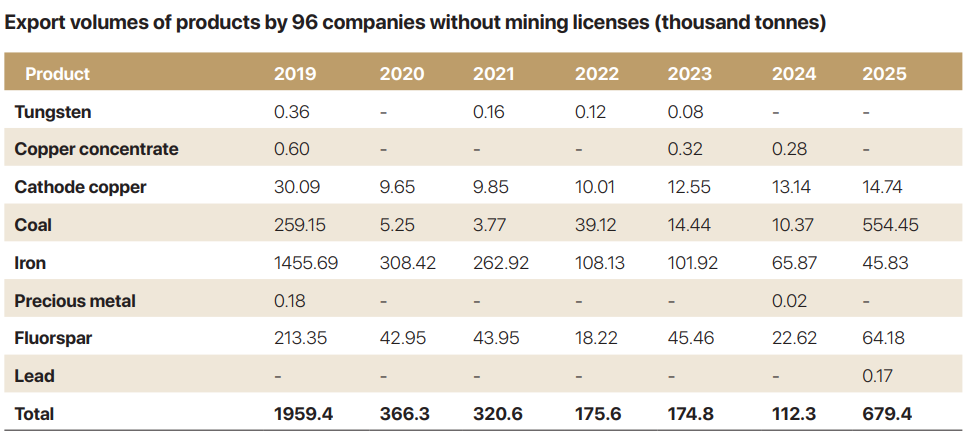
Under this provision, if a mining license holder operates a processing plant, no additional license will be required. However, if an entity does not hold a mining license, it will be required to obtain a processing license. For secondary deposits, no license will be required and the current regulation will remain unchanged. According to the General Customs Administration, exports of processed products by companies without mining licenses reached 1.9 million tonnes in 2019, but declined to 366.3 thousand tonnes the following year. In 2025, exports slightly recovered to 679.4 thousand tonnes due to rising prices of some raw materials. As of last year, 96 companies exported processed products, but only 21 had their mining work plans and reports approved by the MRPA. The activities of the remaining 75 companies remain unclear. To address this, the draft amendment proposes introducing processing licenses in order to register these companies.
Fourth: Mineral royalty revenues will be allocated more to local governments.
All 21 provinces and 330 soums of Mongolia receive a share of revenues generated by the mining sector for the state budget in one form or another. More directly, they receive a portion of the MRR distributed through the Local Development Fund. In order to increase MRR revenues, the amendments propose requiring artisanal miners to become MRR payers. In addition, while 20 percent of MRR revenues currently go to the Local Development Fund, the share allocated to provinces and soums affected by mining activities will be increased to 30 percent. According to the sector ministry and experts, this will become a major lever for supporting local development and improving relationships and understanding between mining operations and local communities. In addition, the MRR for copper consists of a base rate of 5 percent for concentrate and an additional rate of up to 5 percent. The additional rate of up to 5 percent will vary depending on increases in market prices. However, the MRR rate applied to Erdenet Mining Corporation SOE will remain unchanged in the coming years. According to discussions with the Ministry of Finance, reducing the royalty rate for Erdenet could create pressure on the state budget. The base royalty rate applies regardless of whether the minerals are widely distributed minerals or produced by domestic energy mines, and this arrangement will remain unchanged. In Mongolia, there is also an unrealistic practice of imposing royalties on by-product elements. At Erdenet Mining Corporation and Darkhan Metallurgical Plant, royalties are sometimes imposed on by-products that could be considered economically unviable minerals. Currently, due to the rise in copper prices, Erdenet Mining Corporation is paying the highest royalty rate of 20 percent. In addition, the company pays a further 1.5 percent on by-products that have little economic value. To reduce the significant difference in royalty payments when processing plants purchase raw materials domestically, process them, and export the products, the amendments propose that royalties will not be charged twice and will instead be paid once. According to the sector ministry, this is expected to increase processing and refining activities. To implement this change, an amendment will be made to Article 59.1.2 of the Budget Law, which currently states that 10 percent of mineral royalty revenues, except those specified in Article 47.3 of the Minerals Law, shall be allocated accordingly.
WHAT OTHER LAWS AND REGULATIONS WILL BE AMENDED ALONGSIDE THE DRAFT AMENDMENTS?
In addition to the provisions mentioned above, the draft amendments include regulations, standards, requirements, and lists to be approved by Parliament, the Government, and the central government administrative body responsible for geology and mining. The State Great Khural will approve the list of economically significant by-product minerals subject to MRR. The Government of Mongolia will approve the list of critical minerals. The central administrative body responsible for geology and mining will approve the requirements for feasibility studies, the model agreement for the use of widely distributed minerals, and regulations related to licensing, renewal, revocation, and operational procedures for surveying activities and mining technology design. In addition:
» An amendment will be made to Article 11 of the Law on the National Wealth Fund, which concerns the sources of the Wealth Fund.
» The decision on the royalty rate for by-product elements in copper concentrate, currently regulated under Article 47.5 of the Minerals Law stating that the percentage may increase depending on market price growth and the level of processing, will be determined by Parliament.
The authority to issue licenses for widely distributed minerals will be transferred from local administrations to the MRPA. The reason for this change is that local administrative bodies have issued such licenses in areas of potential gold occurrences in provinces such as Uvurkhangai and Selenge. The economic viability of widely distributed minerals is generally considered profitable within a distance of around 25 km, yet licenses have sometimes been granted for locations as far as 100 km from the market. This has created problems. Therefore, since the MRPA concentrates baseline geological research, it is considered the most appropriate institution to organize this process, bring projects into economic circulation, and ensure realistic economic benefits. Exploration in border areas has long been discussed. In addition to domestic exploration companies, both Russia and China have proposed conducting joint exploration studies. In December last year, Russia submitted a proposal to Mongolia, which was accepted, and it was presented to the Government in January 2026. There are no legal obstacles to conducting such studies. Article 26.2.2 of the Law on the State Border of Mongolia states that issues related to constructing facilities, conducting activities, or using land in the border strip other than those intended for border protection shall be decided by the Government. Therefore, there is an opportunity to address such matters at a higher level. The mining sector generally supports issuing licenses in border areas. Currently, of the 54 licenses in border regions, 38 are mining licenses and 16 are exploration licenses.
The following 15 issues are included in the draft laws to repeal, amend, and supplement related legislation.
1. The Law on Common Minerals will be repealed. In connection with this, the second issue concerns amendments to the procedure for implementing the Minerals Law. Existing licenses will be registered, and future regulations will be governed under the Minerals Law.
2. Amendments will be made to the Law on the Mineral Products Exchange. The current law defines exchange trading as transactions related to exports. Since the law stipulates that exchange trading conditions are based on the border price of neighboring countries’ border ports, domestic supply of raw materials has been overlooked. Recently, Prime Minister G. Zandanshatar visited the steel complex in Altanshiree soum of Dornogovi province and noted the lack of raw materials. The reason is that state-owned companies are required to trade their products through the exchange, and exchange trading is defined as export-related transactions. Therefore, the amendment introduces a concept that allows continuous domestic supply of raw materials and more flexible delivery conditions. It also allows state-owned companies such as Erdenes Tavan Tolgoi JSC to lease areas at the Gantsmod border port and other ports to facilitate the export of their products. In other words, the amendment introduces flexibility in trade and delivery conditions, allowing sellers and buyers to arrange conditions depending on delivery terms.
3. Amendments will be made to the Budget Law. This will enable 20 percent of mineral royalty revenues to be directly allocated to the Local Development Fund.
4. Amendments will be made to the Law on the National Wealth Fund.
5. Further amendments will also be made to the Law on the National Wealth Fund and to the law governing its implementation procedures. The ministry proposes that a portion of the 65 percent of mineral royalty revenues currently allocated to the Future Heritage Fund, which is part of the National Wealth Fund, will be transferred to the Development Fund. The reason for this change is that if prioritized development projects are approved by Parliament and the Government, they can be financed through this fund. In addition, if the state budget runs a surplus, 50 percent of that surplus will continue to be allocated to the Development Fund. As a result, the Development Fund will have two sources of revenue.
6. Amendments will be made to the Law on Nuclear Energy. Currently, rare earth elements are confused with uranium and thorium in this law. The amendment will correct the terminology. Since rare earth elements are minerals, they should not be regulated under the Nuclear Energy Law but under the Minerals Law.
7. Amendments will be made to the Law on Permits.
8. Amendments will be made to the Law on Special Protected Areas. Previously, baseline geological research could be conducted in state special protected areas. However, amendments to the 2023 Budget Law halted such activities. The new amendments will restore the possibility of conducting geological baseline research in these areas.
9. Amendments to the so-called “Long-Named Law,” formally titled the Law on Prohibiting Mineral Exploration and Mining in Headwaters of Rivers, Water Reservoir Protection Zones, and Forested Areas, will support the development of critical minerals.
10. Amendments are planned for the Land Law. This will enable exploration and mining activities in areas designated for local special needs. The main objective
is to allow exploration and mining on up to 25 percent of Mongolia’s territory. It also addresses the issue of local administrations intentionally or unintentionally designating land for local needs in ways that restrict exploration, which will now be resolved at the Government level.
11. Amendments will be made to the Law on Violations.
12. Amendments will also be made to the Law on Procedures for Resolving Violations, in connection with the Minerals Law amendments.
In conclusion, since 2010, the mining sector has gradually contracted year by year. Several attempts have been made to support and expand the sector, but they have not been very successful. The current amendments to the Minerals Law and the related legislation are intended to expand the sector. As a result, revenues directed to local communities are expected to increase, and both domestic and foreign investment in exploration, mining, and mineral processing is anticipated to grow. MSight will continue to follow and report on this topic until the draft law is discussed and adopted.
Mining Insight Magazine, February 2026 №02 (051)